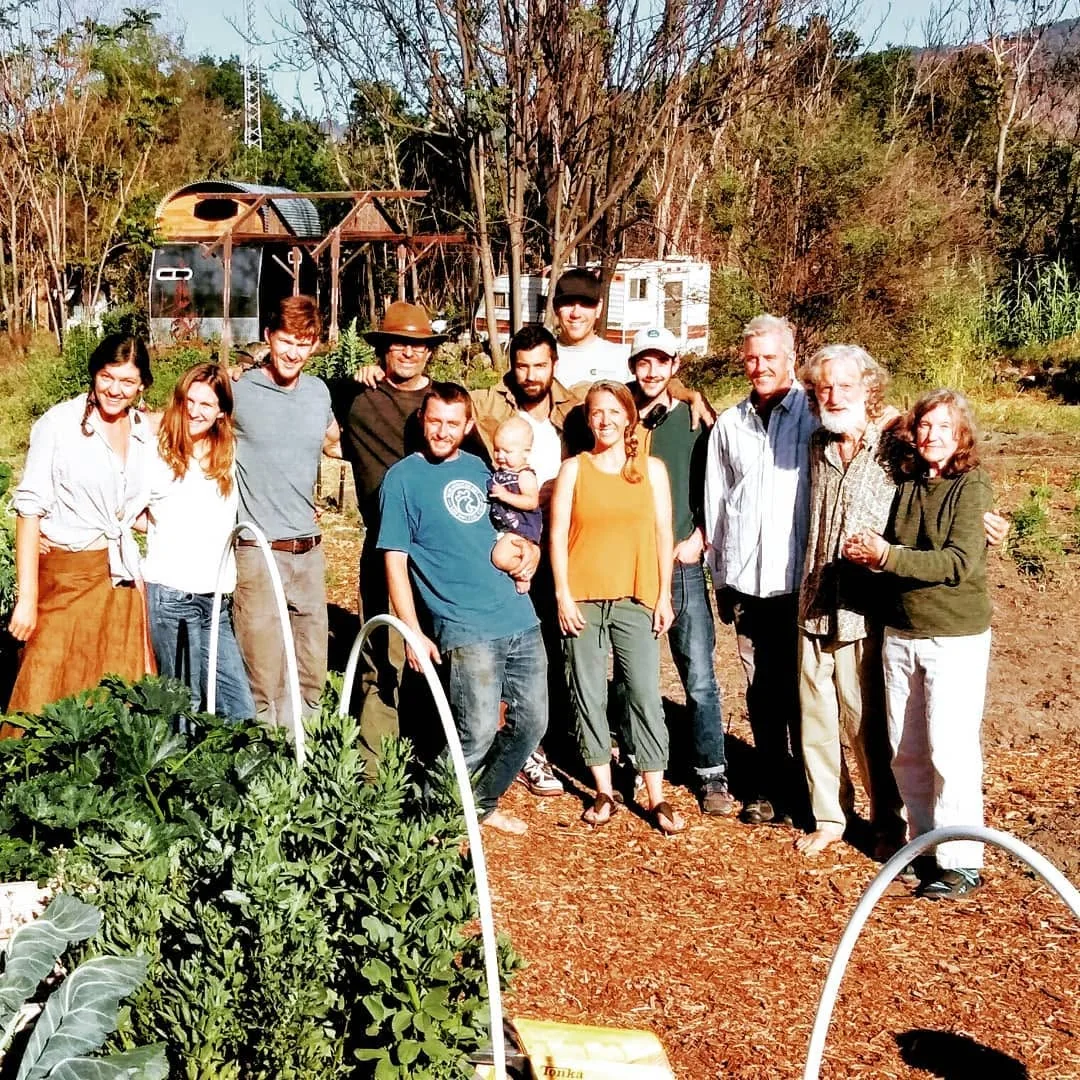
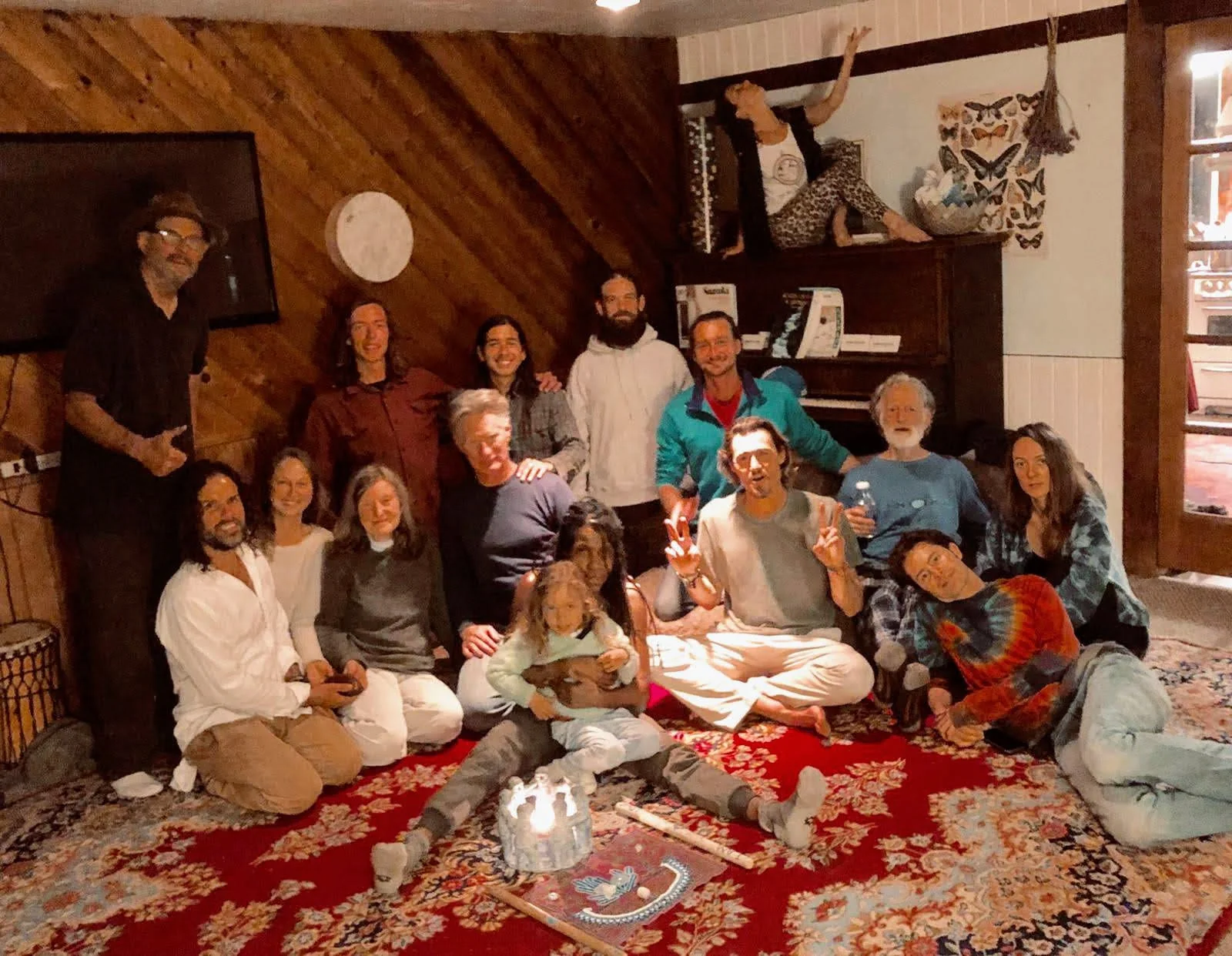
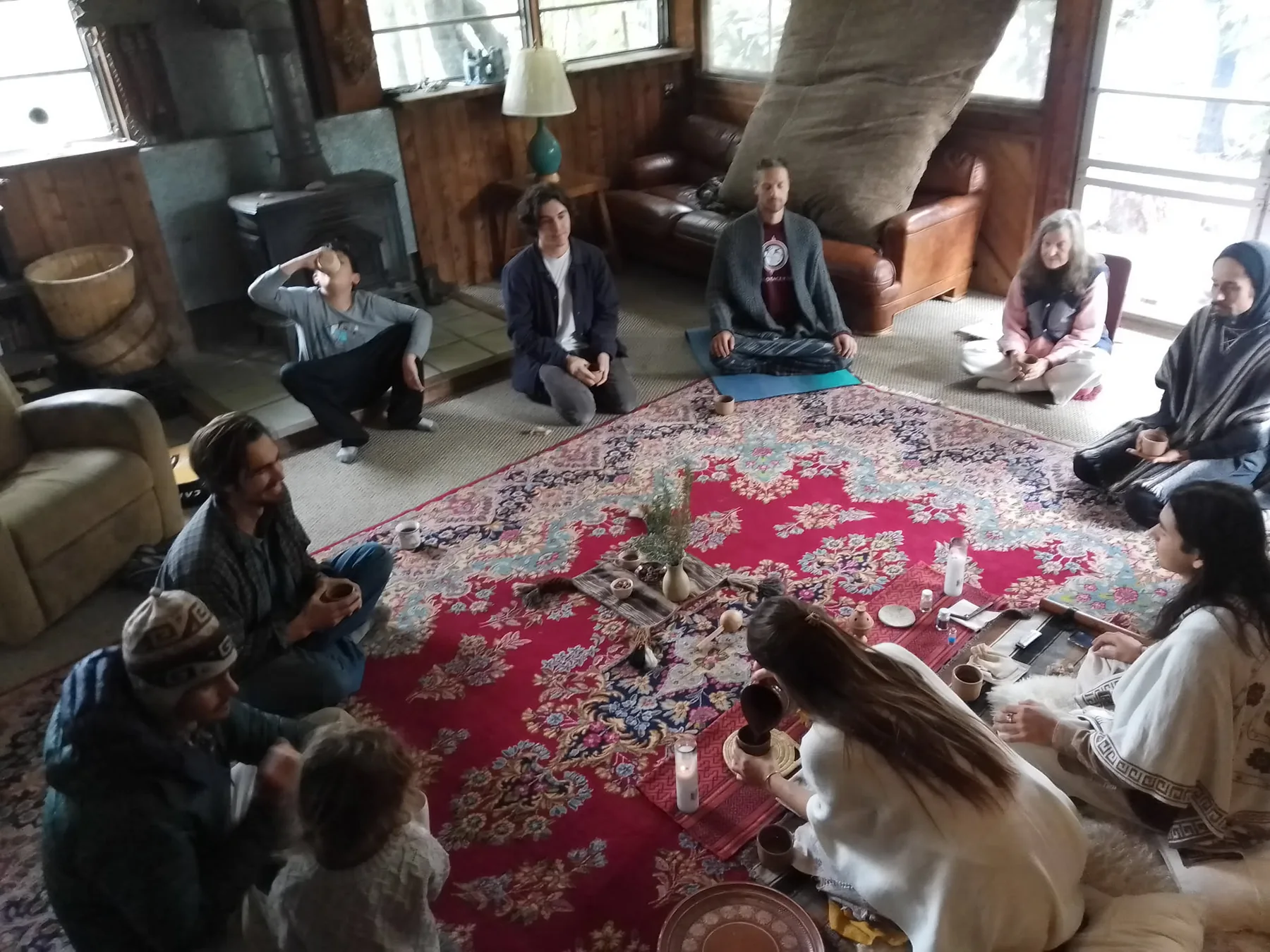
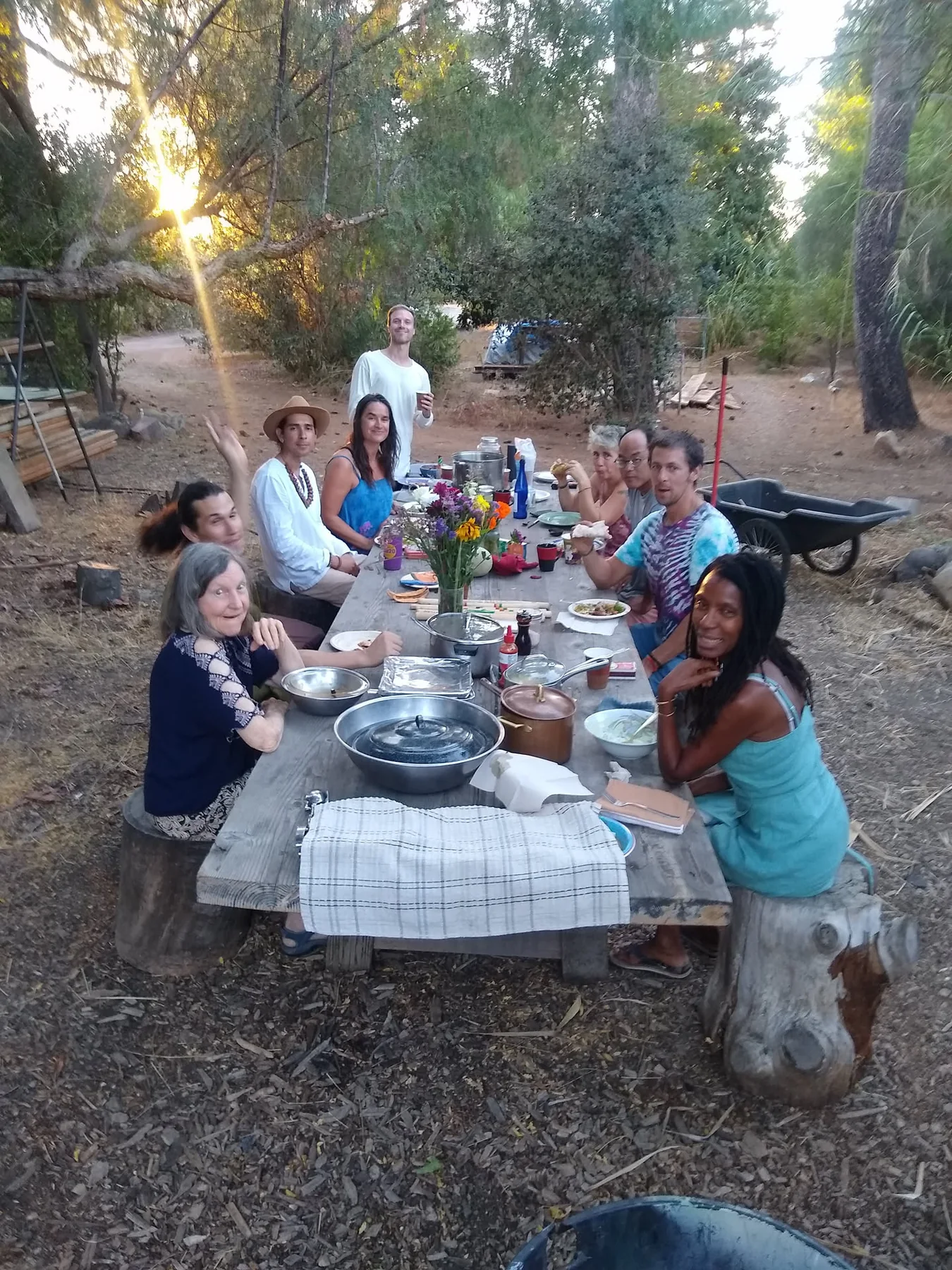
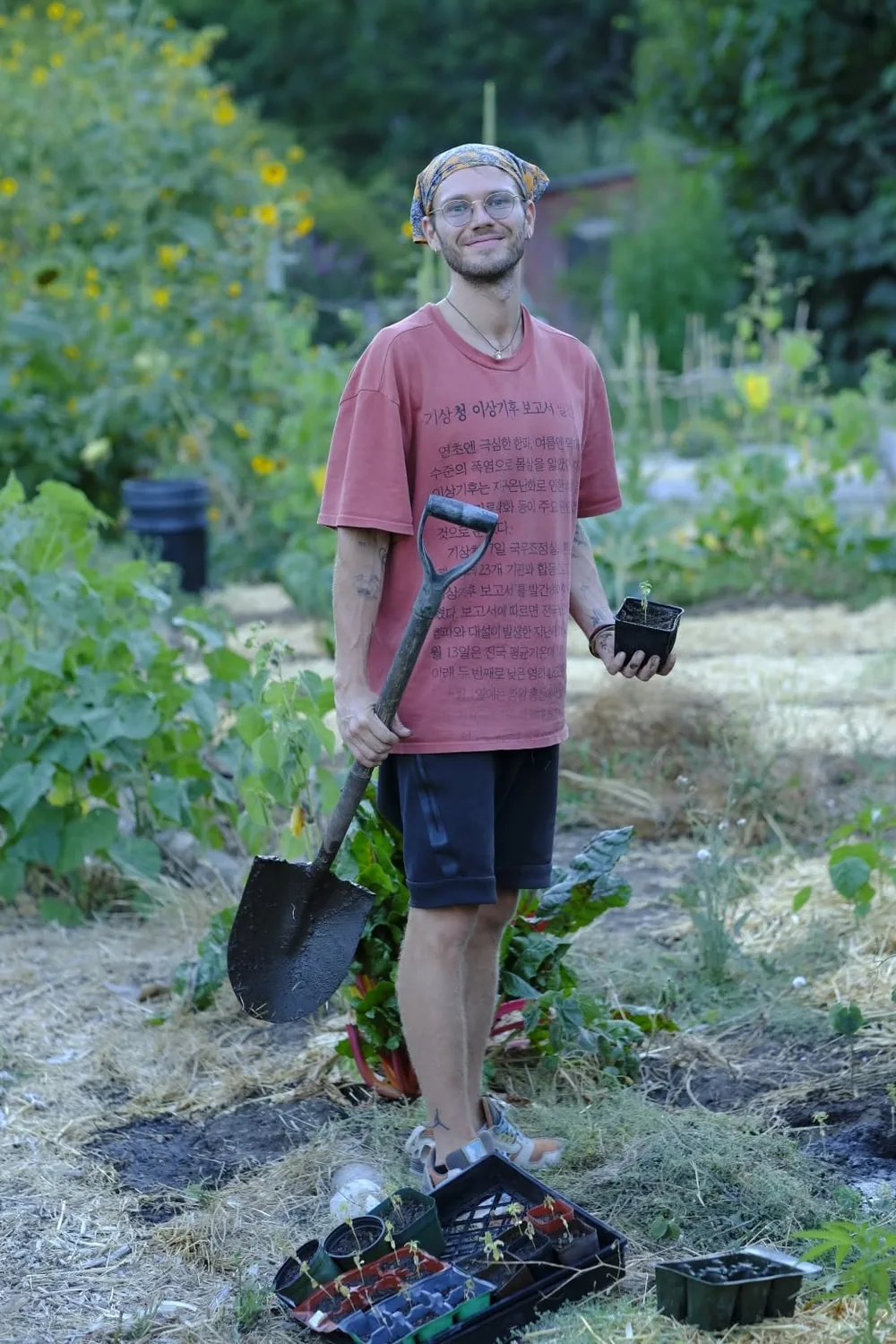
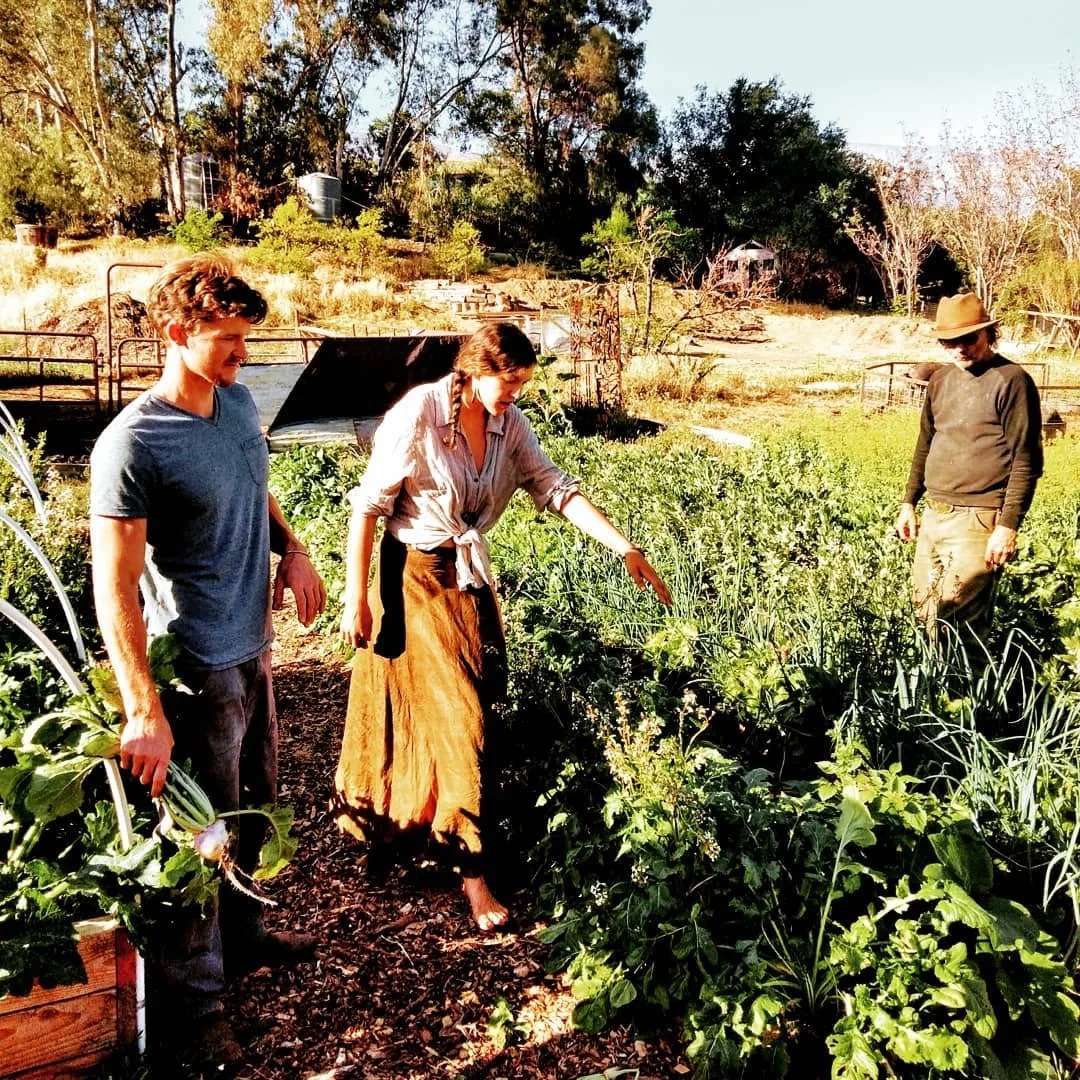
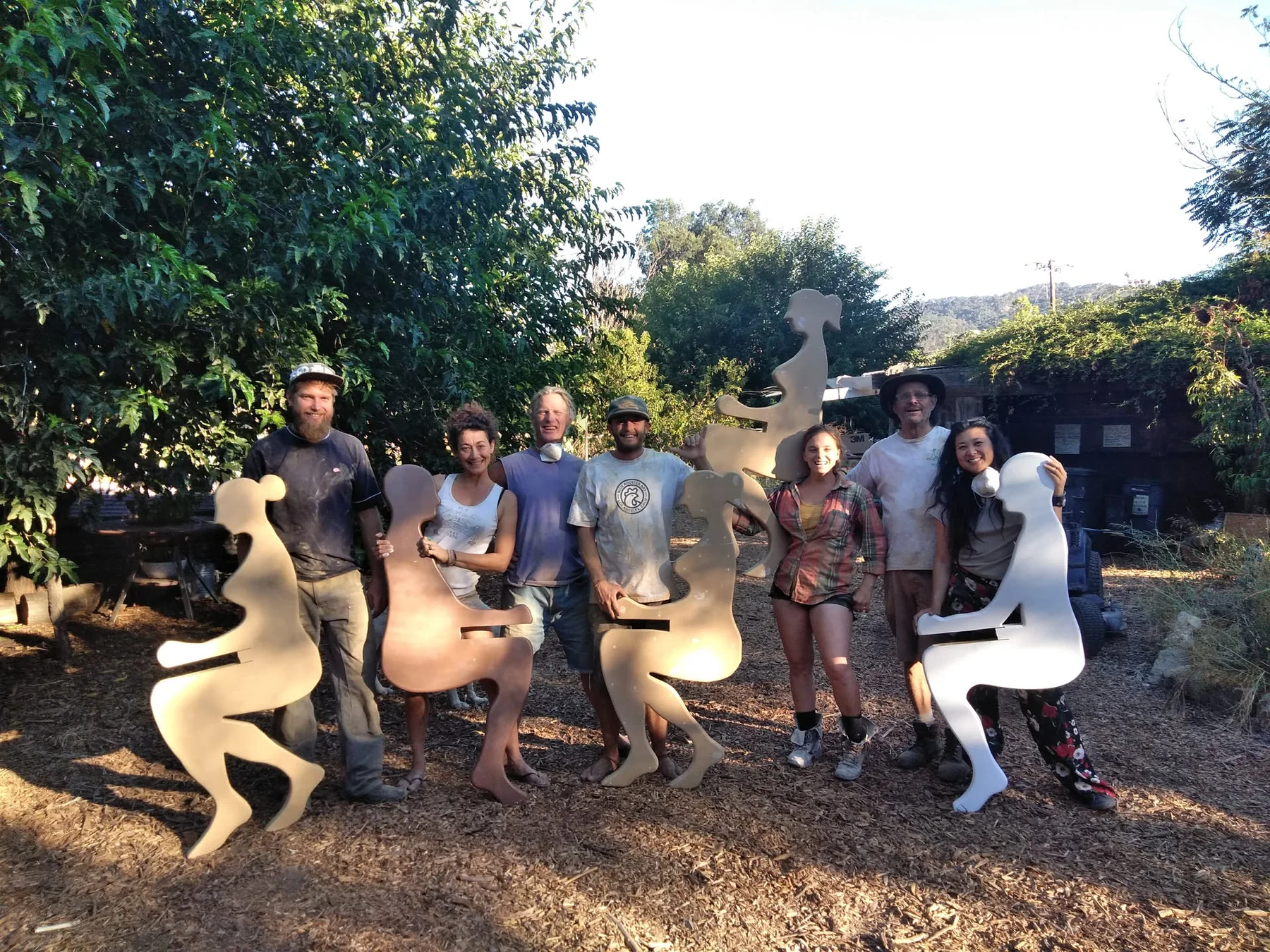
Full Circle was shaped through meetings, meals, disagreement, friendship, celebration and ordinary work carried out together. The social landscape was every bit as important as the physical one.
The Full Circle community gathered in the garden
The social landscape
A place made by people
The workbook describes a community of roughly twenty residents and three children living among cabins, trailers, motorhomes and shared buildings on 5.5 acres. Full Circle’s history began with people helping rebuild a fire-damaged house in exchange for a place to live, and evolved over decades into an experiment in land stewardship, mutual care and self-governance.
38 yearscommunity history recorded in 2022
~20residents
3children
Thursdaygeneral meeting day
3meeting forms
01 · Community history
A community born through rebuilding
Full Circle’s social history began before the 2022 design project. The farm’s founder invited people to help rebuild a house that had been destroyed in an earlier fire, offering a place to live in exchange for their labor. What began as a practical arrangement became a long-running intentional community.
Residents and friends gathered in the main house
BeginningRebuild the house
People were invited to live on the land while helping reconstruct a fire-damaged home.
Over decadesA village grew
Cabins, trailers, gardens, workshops and shared spaces accumulated through many hands and many eras.
By 2022About twenty residents
The farm had become a multigenerational community with children, elders, long-term residents and newer arrivals.
OngoingNever a finished system
Governance, responsibilities and shared purpose continued to change as people and circumstances changed.
Meet in circleListen and make room for every voice
Share responsibilityCare for the land and one another
Repair conflictSeek understanding and resolution
Celebrate giftsHonor what each person brings
02 · Practices of belonging
Making space for one another
The 2022 workbook records three different meeting forms. Each served a different purpose: governing shared life, resolving conflict, or setting work aside long enough to recognize one another’s gifts.
01
General community meetings
The workbook records Thursday as the regular meeting day. During the period I remember most directly, Jaya ran the general meeting on a biweekly rhythm. The community gathered in a circle, lit a candle, held hands and called in good intentions, placing practical decisions inside a ritual that recalled why everyone had gathered.
02
Conflict resolution
When mediation was needed, meetings followed a nonviolent communication format. The purpose was to hear what mattered beneath a disagreement and seek a workable resolution.
03
Heart-sharing circles
Heart circles were reserved for honoring one another’s gifts. Work and problems were set aside so attention could return to appreciation, relationship and the human beings inside the system.
The circle as social infrastructure. Listening, reflection and shared ritual created a different kind of space from ordinary work meetings.
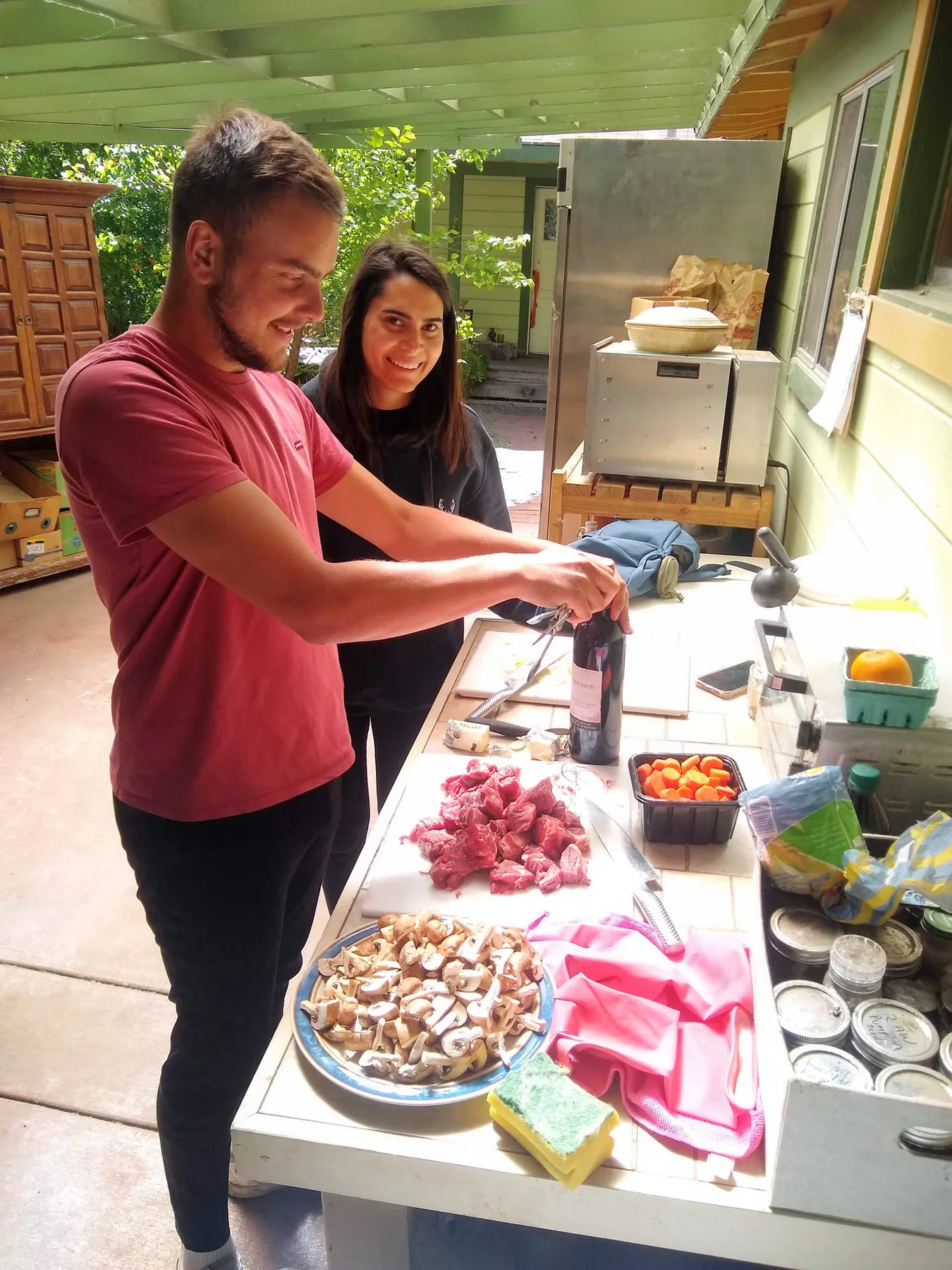
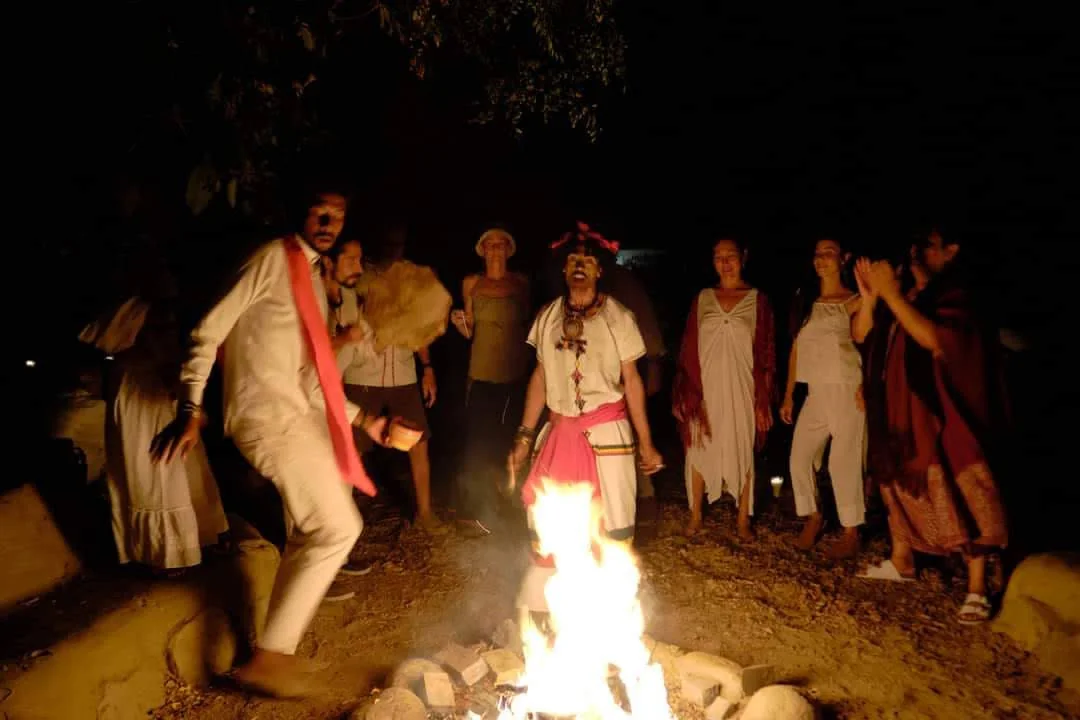
The long table made community visiblePreparing a meal togetherEveryday companionship in the communal houseCelebration and ceremony around the fire
03 · The infrastructure of belonging
Jaya kept the community fed—and meeting
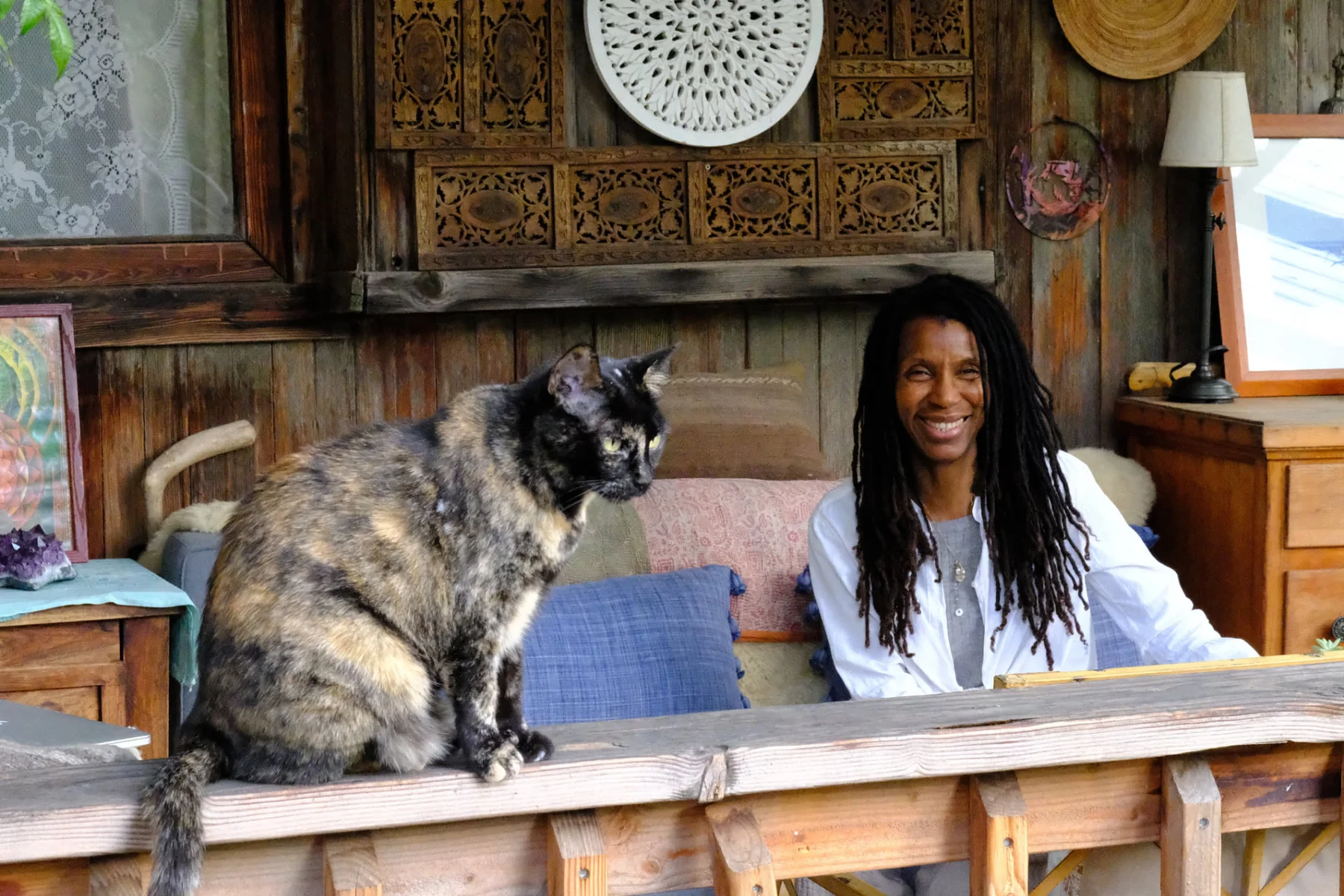
Deanna Jaya Nakosteen was not simply an elder associated with Full Circle. For decades, she operated some of the systems that made communal life possible.
Every day, two residents were assigned to cook a generous vegetarian meal for the community and clean the kitchen afterward. Jaya ran that program: maintaining the schedule, purchasing the food, and keeping the pantry capable of feeding a large household day after day.
Four times a year, bulk deliveries brought the staples of communal life: large bags of rice and lentils, coconut oil, dry goods, spices, toilet paper and other household supplies. The spice inventory became legendary—an unusually rich pantry built for cooks with different tastes and traditions.
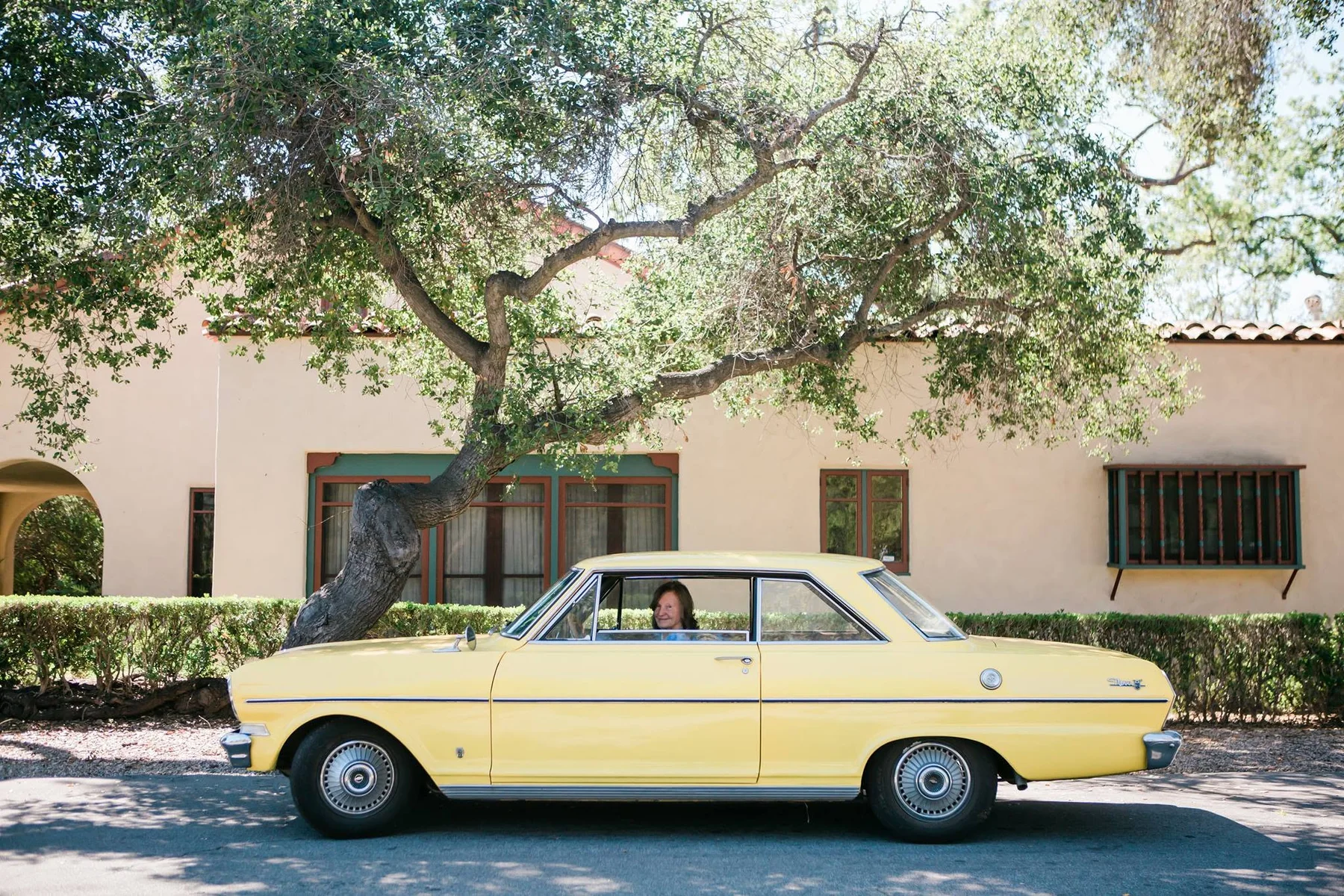
Every Sunday, Jaya drove her big yellow car to the Ojai farmers market, often with one person helping her, and returned with a car full of organic produce. She then stopped at Rainbow Bridge, the local organic market, for the remaining items. She repeated this work for years.
She also ran the biweekly general meetings. The food program and the meeting circle were two expressions of the same work: tending the practical structure through which people could live together.
Deanna Jaya Nakosteen Matriarch, organizer, teacher and keeper of continuity.The Sunday food run Farmers market, Rainbow Bridge, and a car filled with organic produce.
Every day
Two-person kitchen team
Two residents cooked the shared vegetarian meal and cleaned the kitchen afterward.
Four times yearly
Bulk provisioning
Rice, lentils, coconut oil, spices, paper goods and other staples arrived in large deliveries.
Every Sunday
Fresh organic produce
Jaya’s yellow car returned from the farmers market and Rainbow Bridge filled with food.
Every other week
Community meeting
Jaya held the general meeting rhythm as residents worked through decisions and shared responsibilities.
04 · Shared stewardship
Work becomes culture
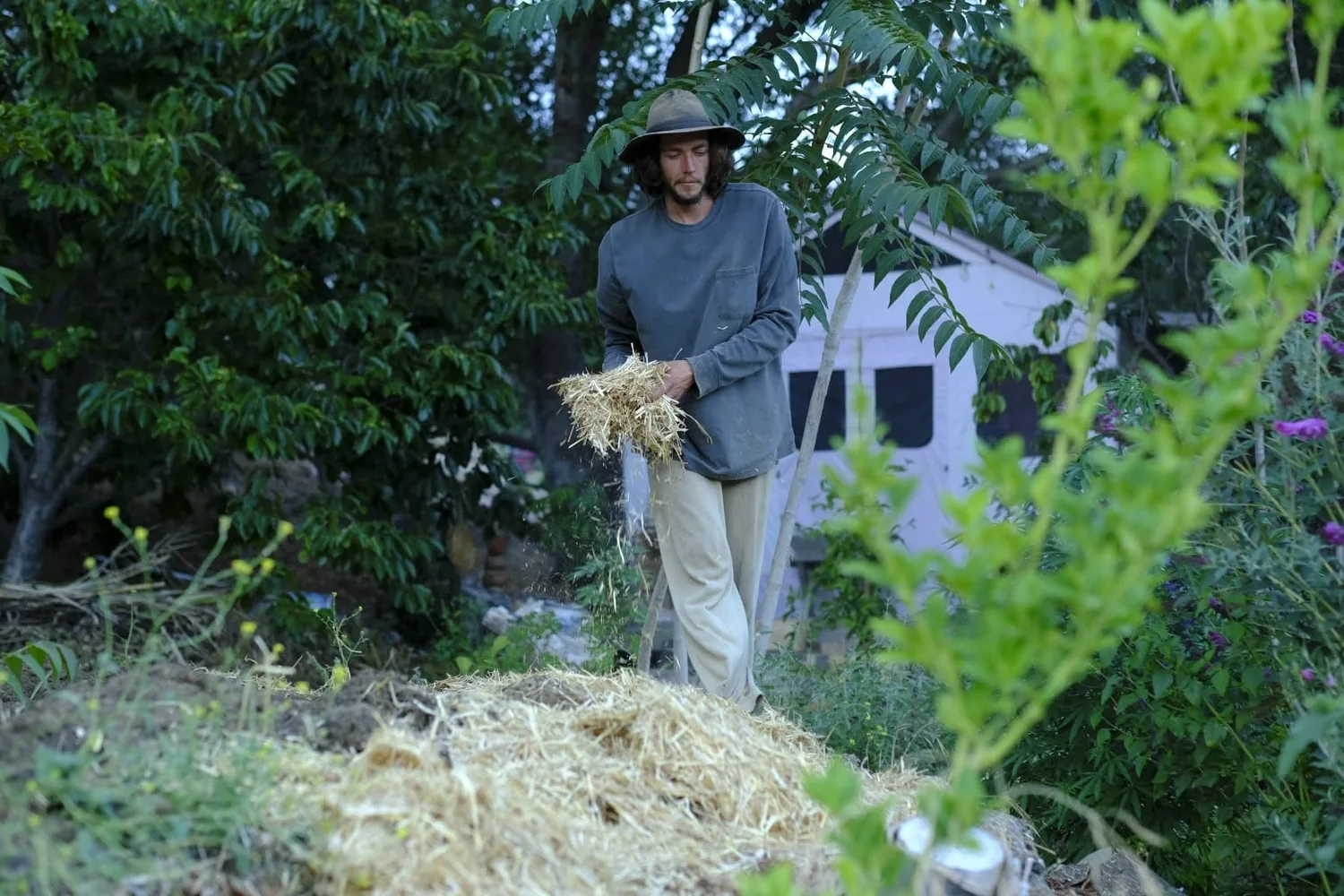
Planting, mulching, moving materials and maintaining pathways were practical tasks. Done together, they also became ways of teaching, belonging and passing knowledge from one person to another.
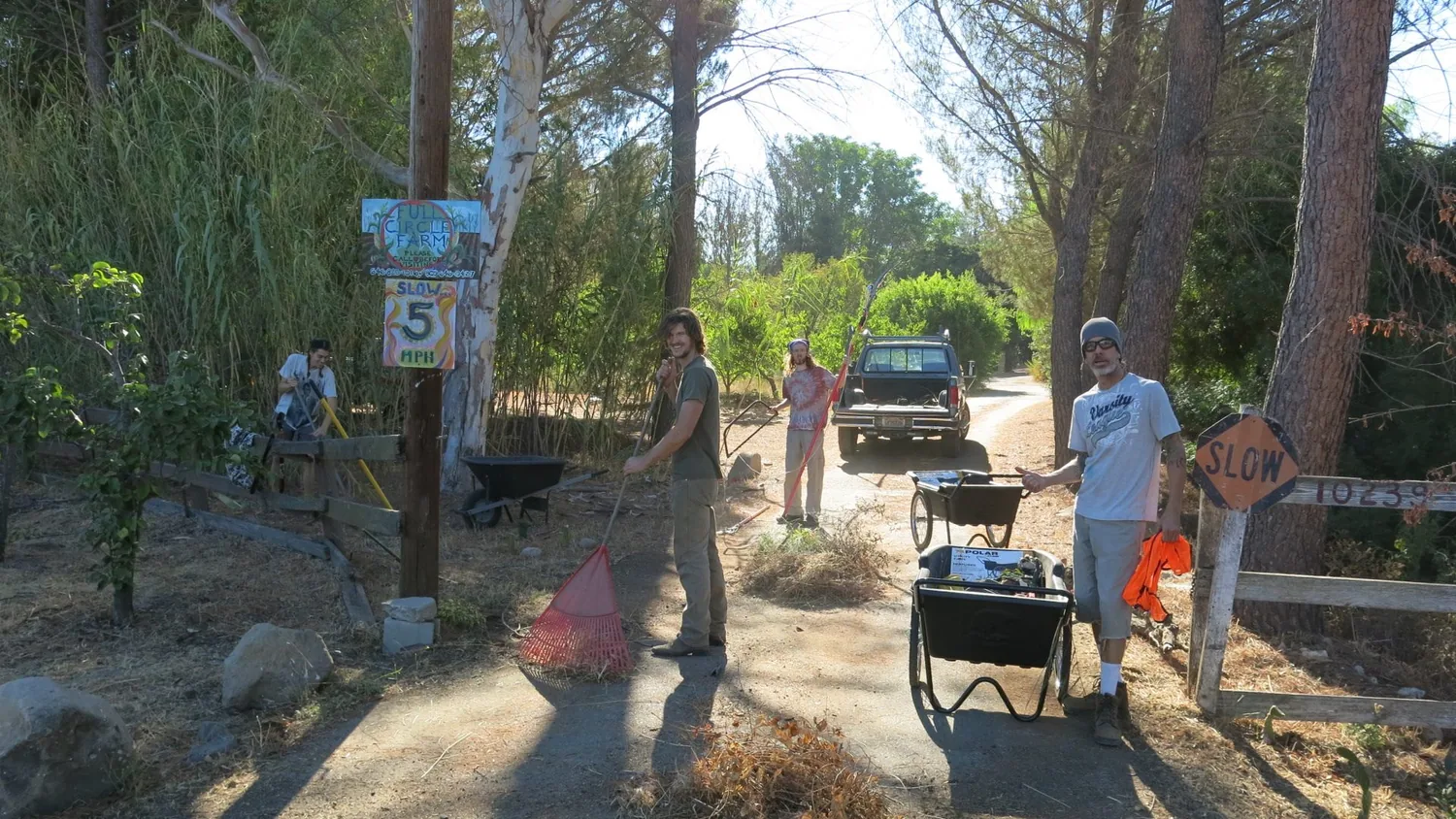
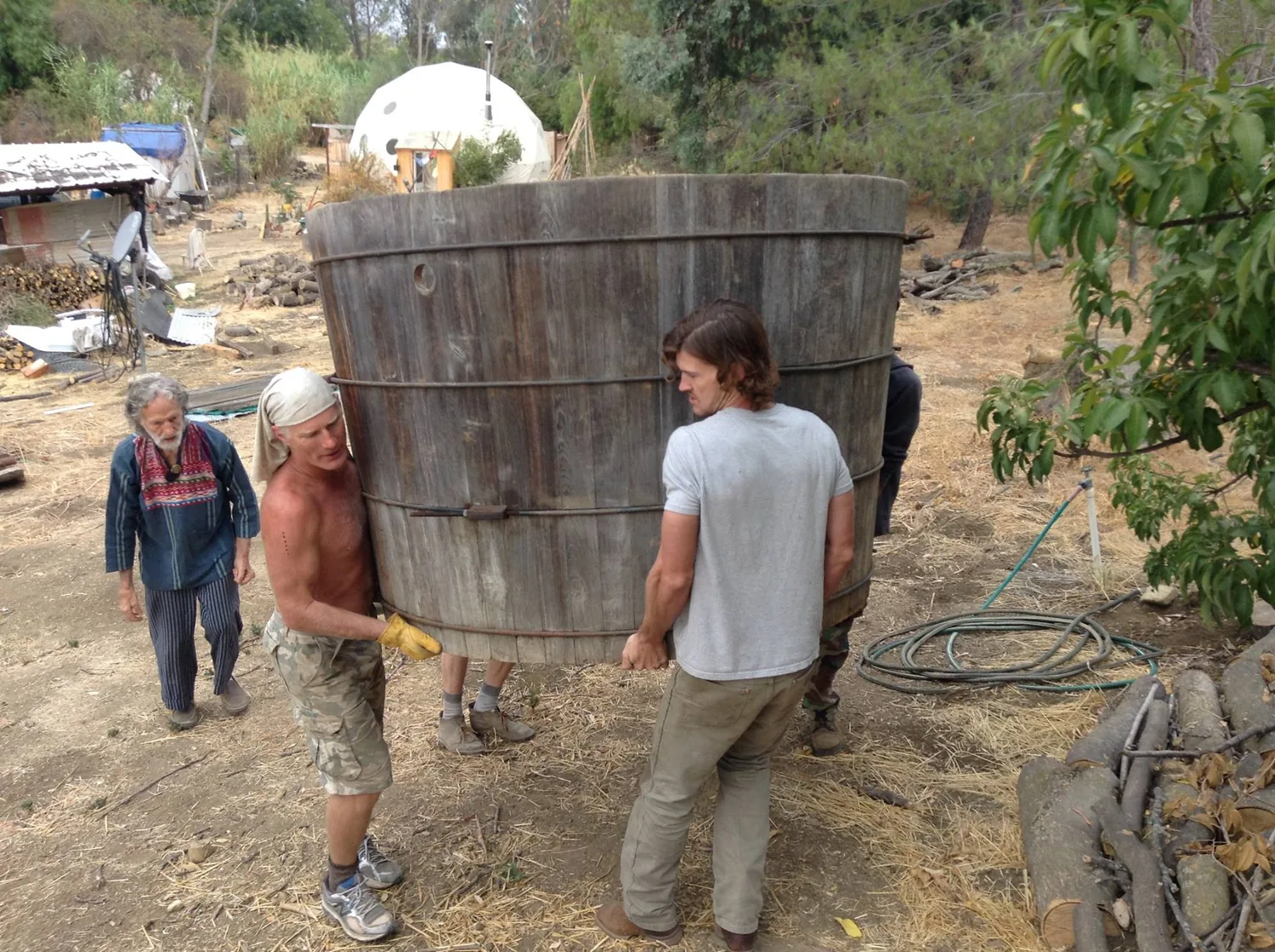
Every new plant carried a small promiseProtecting soil with strawLearning by walking the land togetherA work party at the entranceSome jobs required many handsThe immediate reward
05 · Abundance is shared
Harvest as a social rhythm
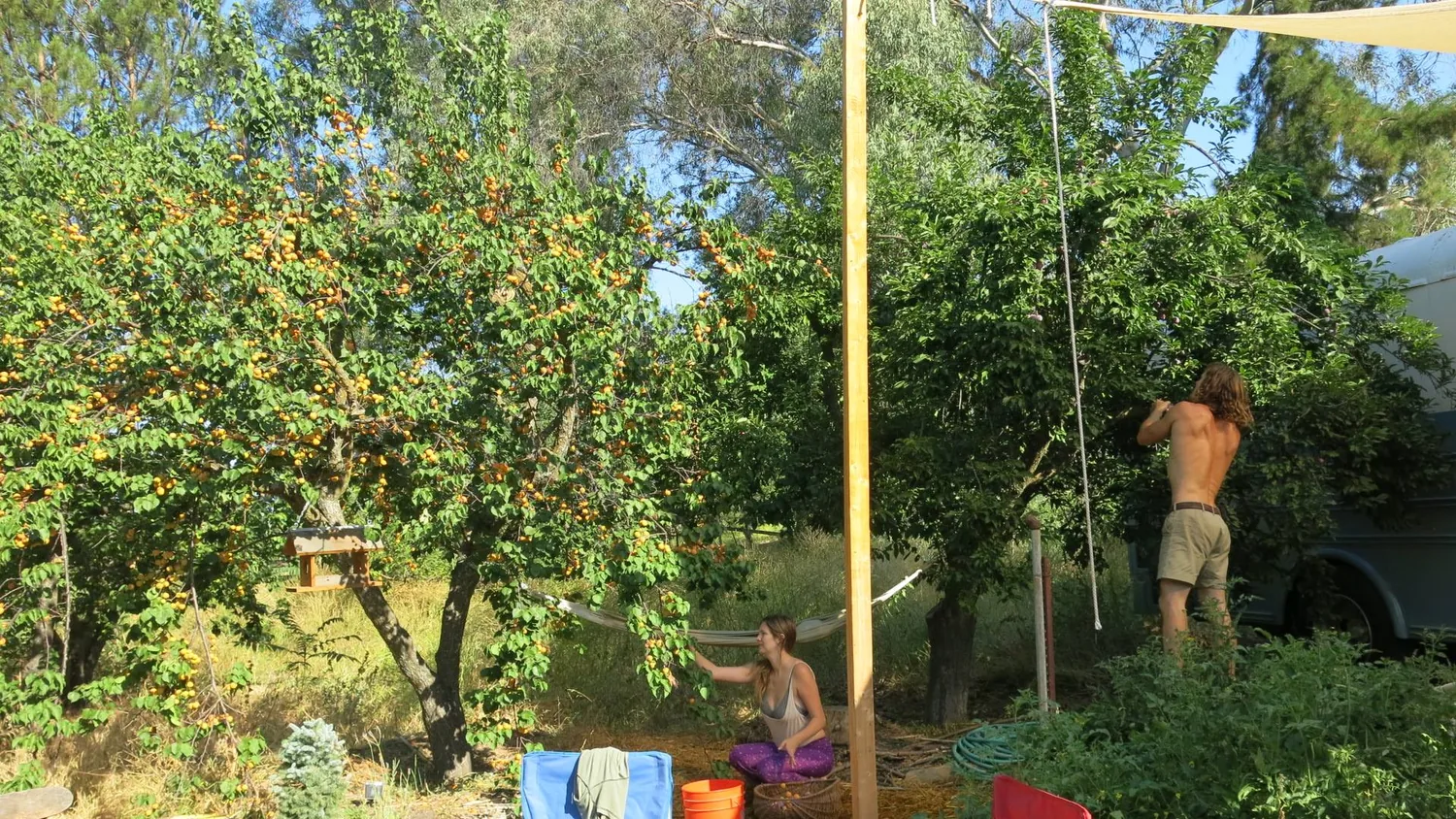
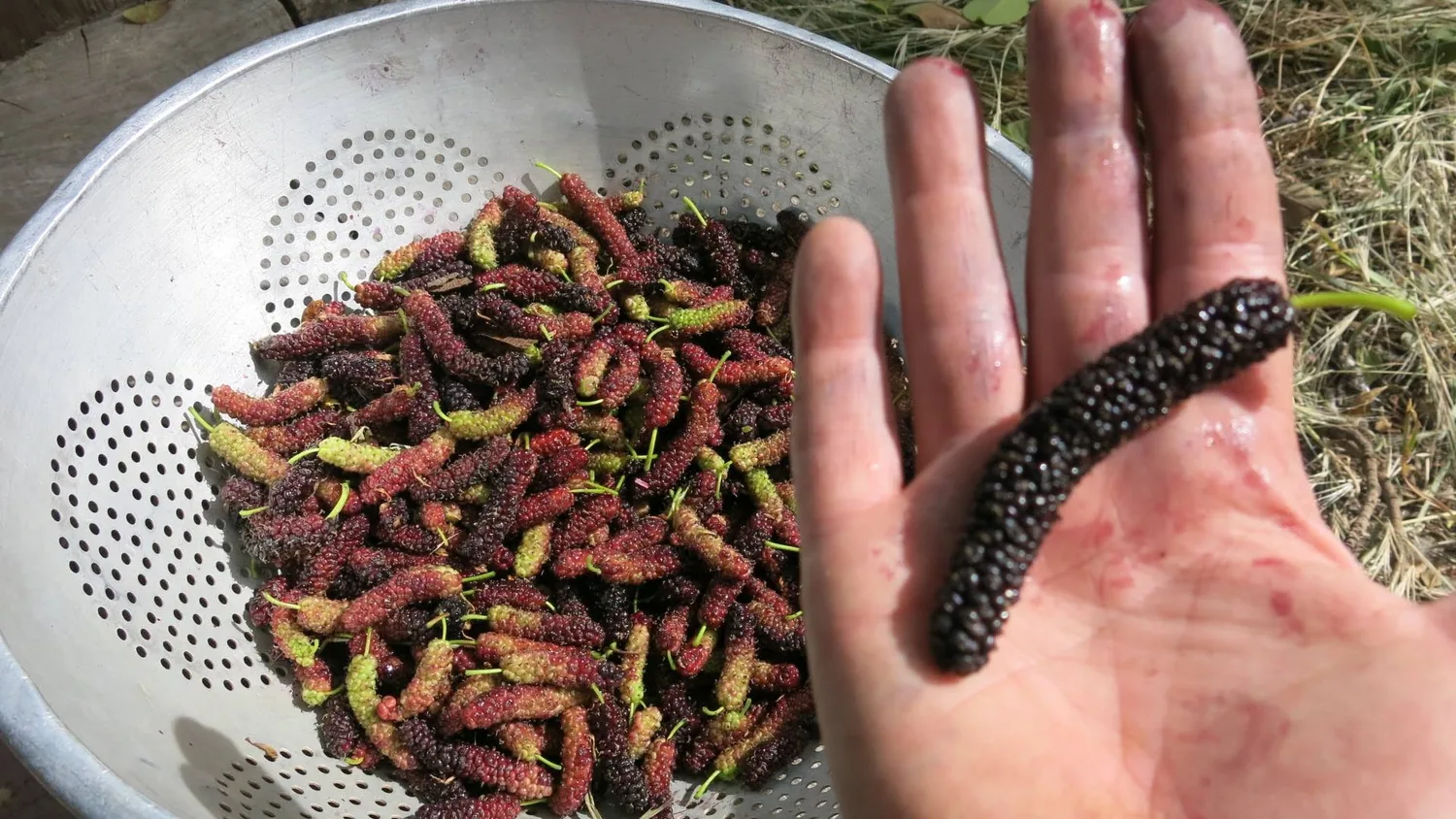
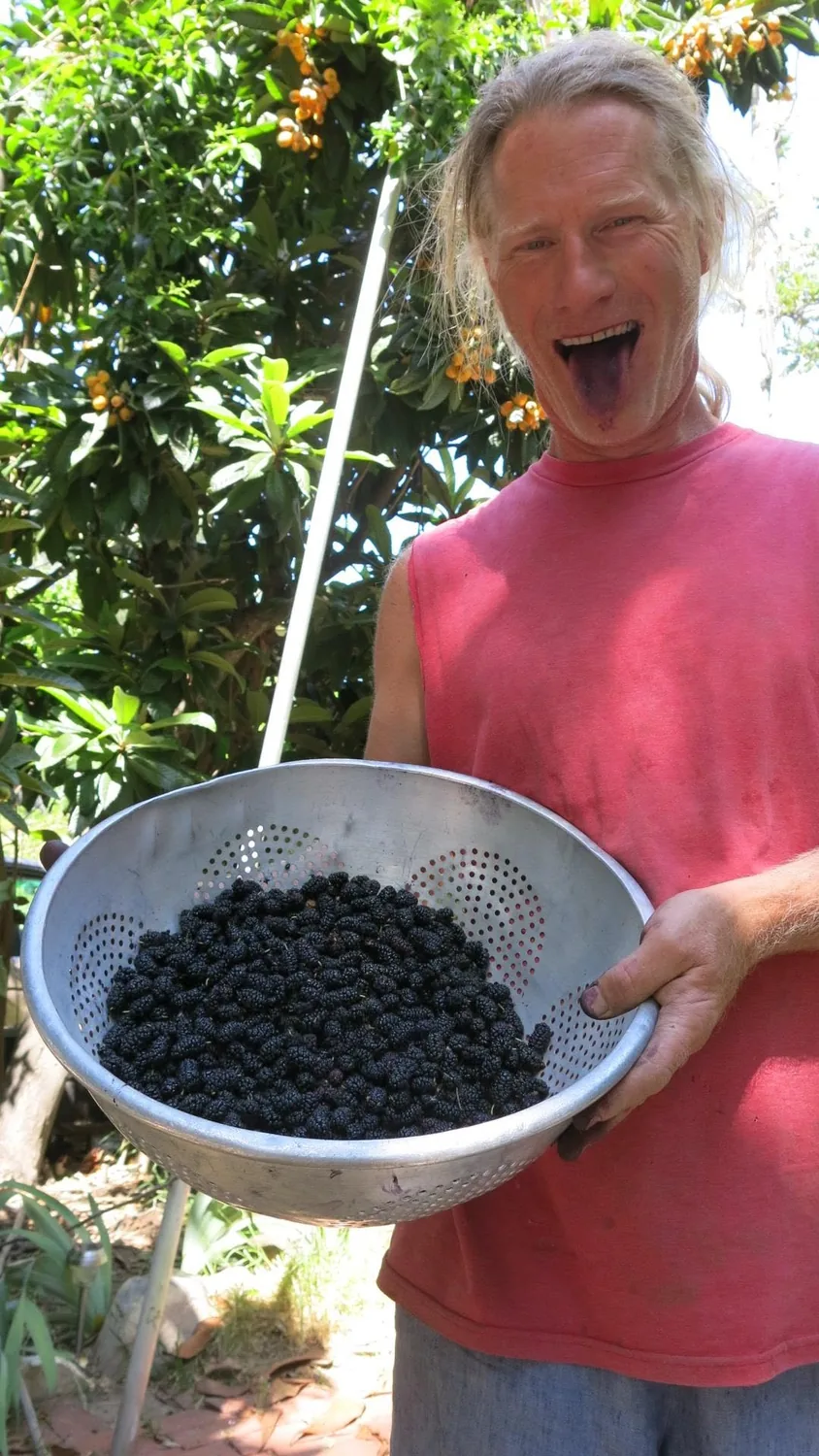
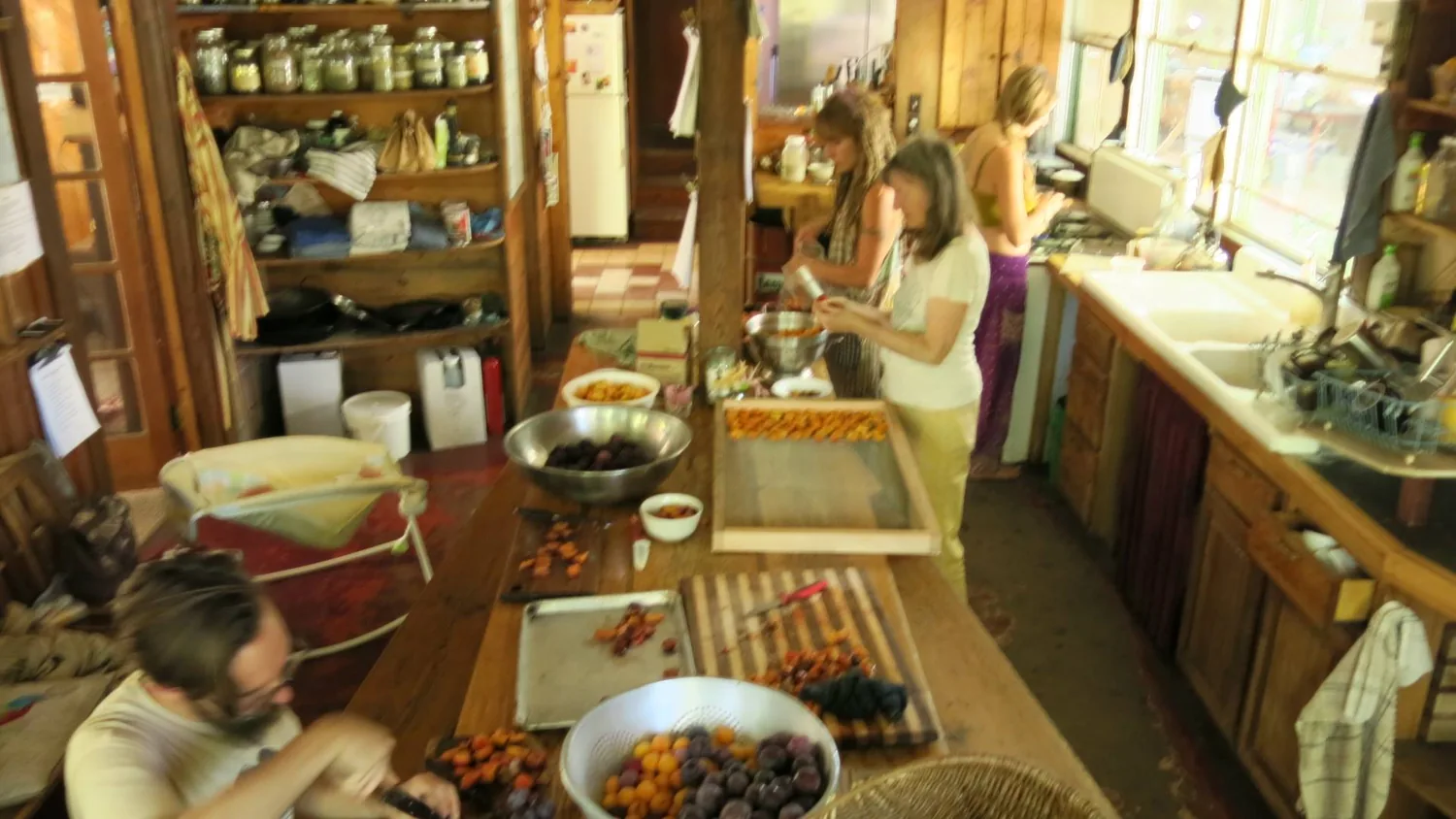
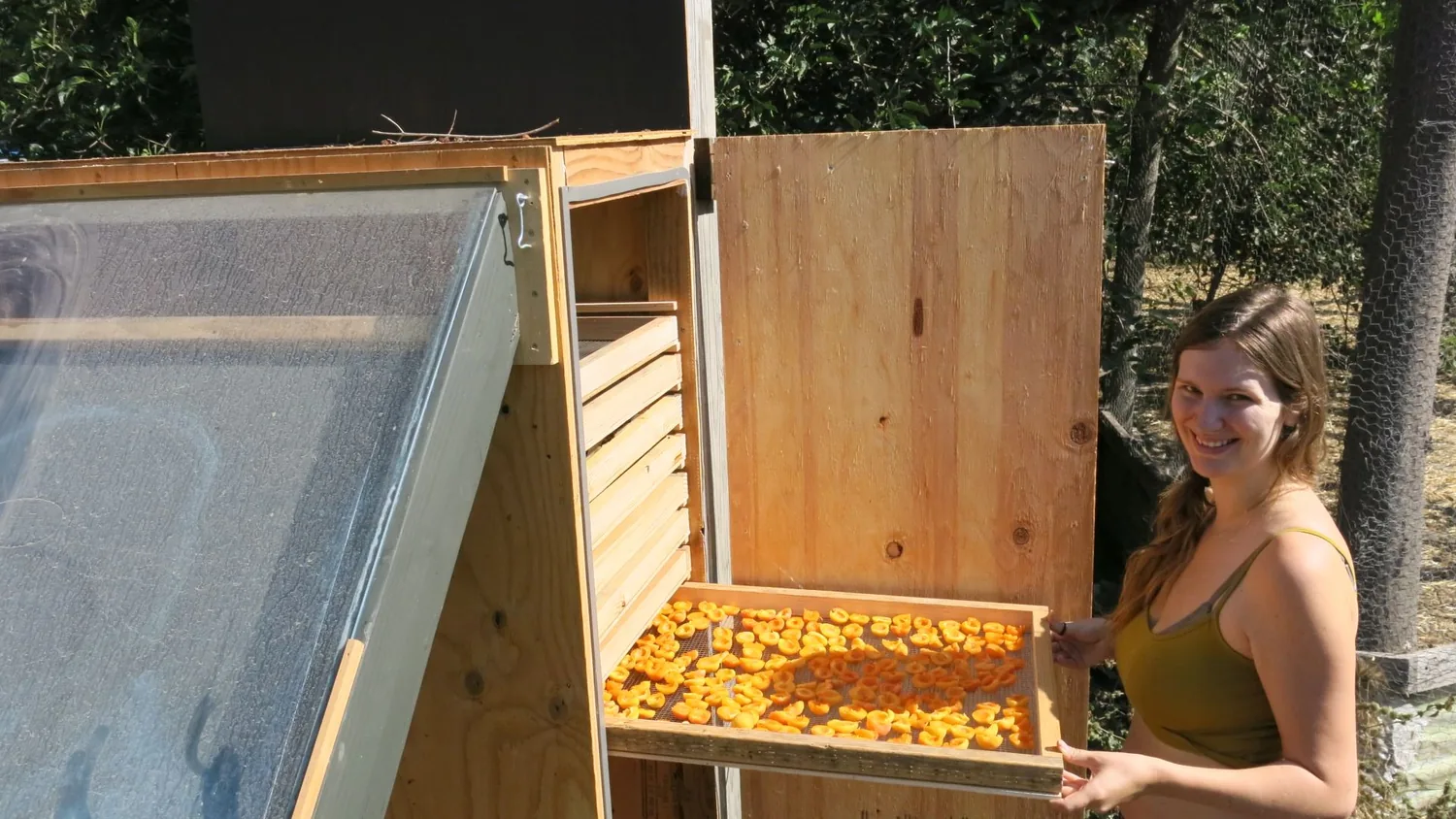
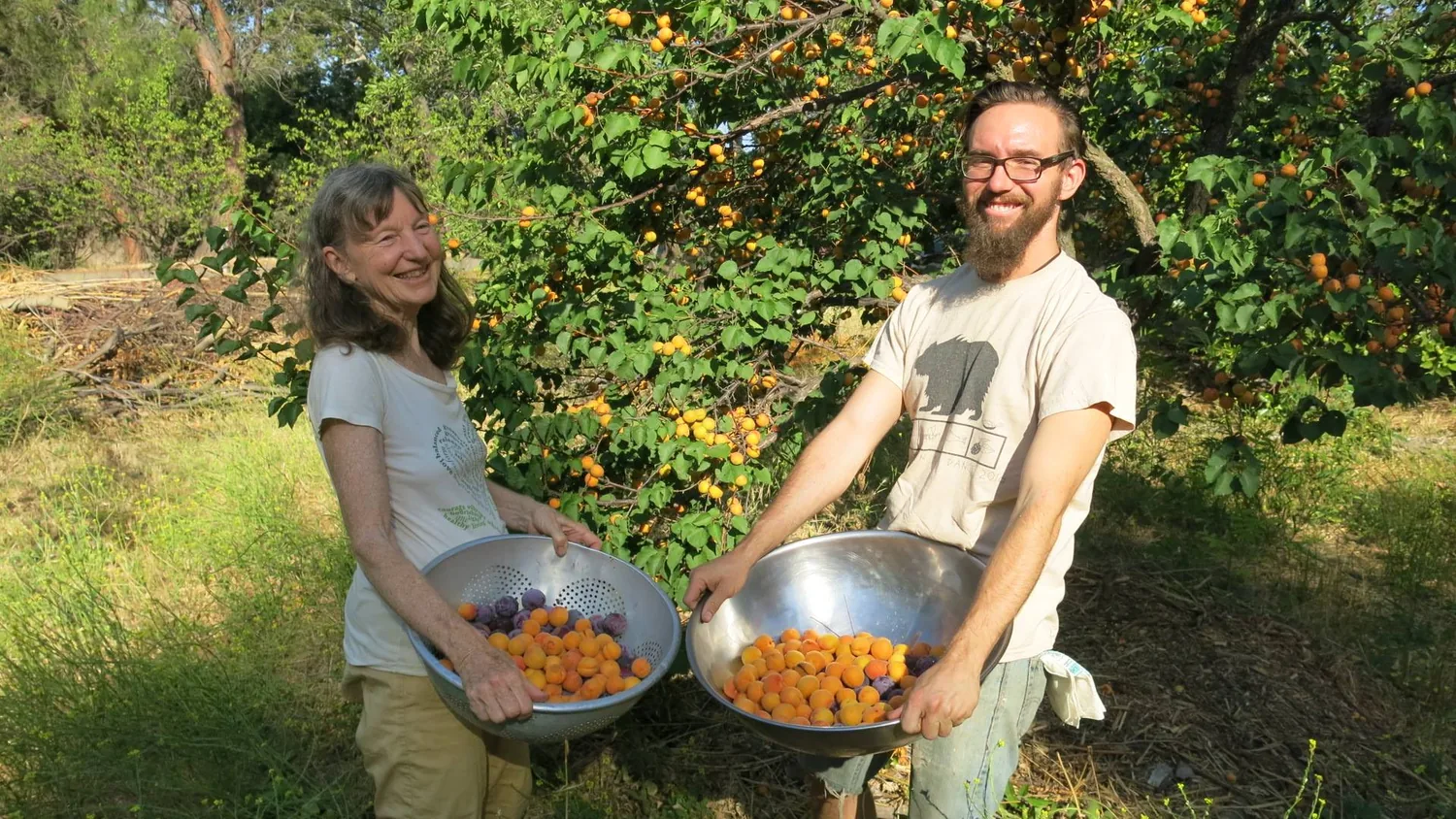
At Full Circle, food moved through many hands: picked in the orchard, carried to the kitchen, eaten fresh, preserved, dried and placed on a communal table. The harvest was biological abundance made visible—and a recurring reason to work and celebrate together.
“Every week a new fruit ripens. All year long.”
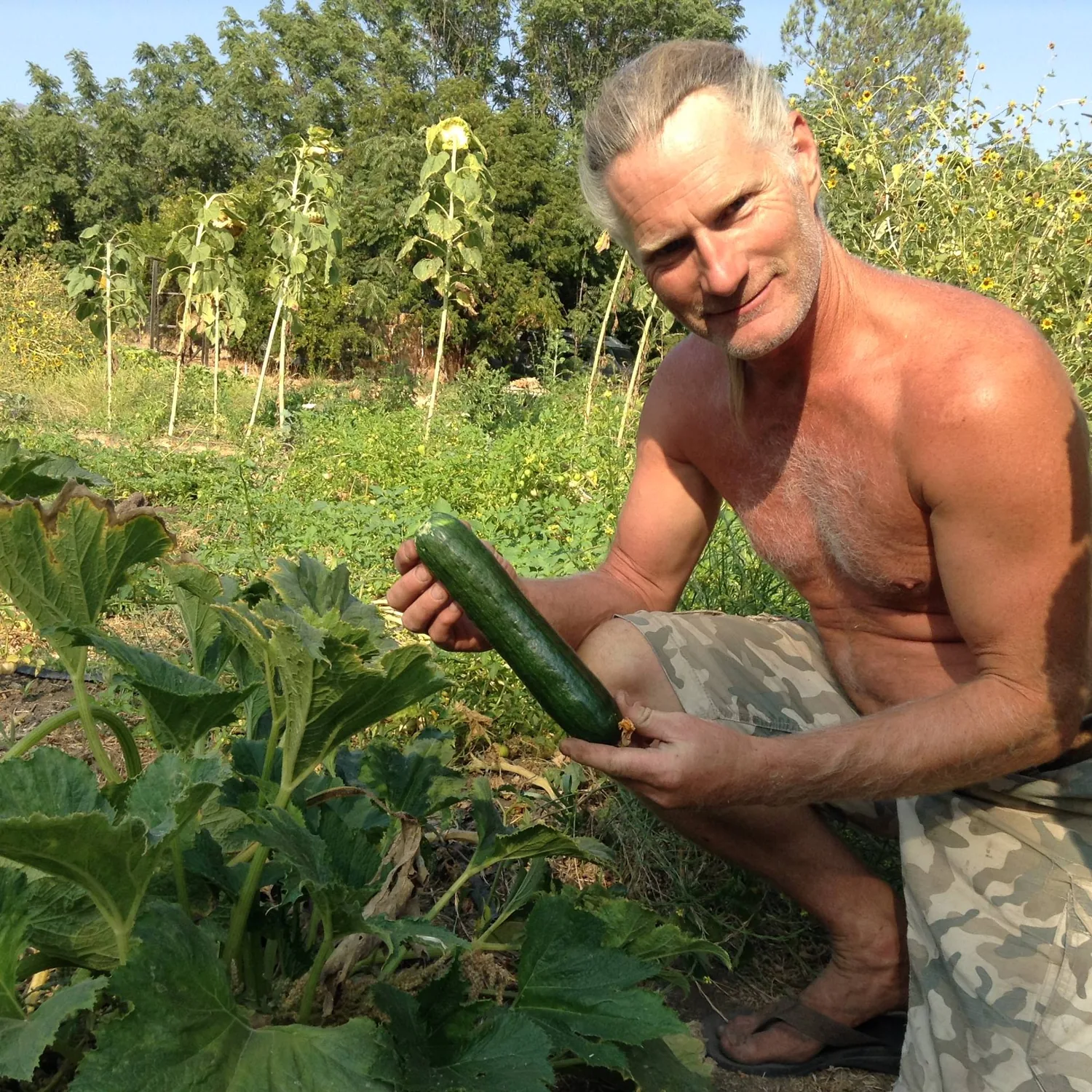
Harvesting beneath the orchard canopyMulberries at full ripenessA bowl filled directly from the treeThe kitchen during preservation seasonDrying fruit with the sunCarrying the harvest home
06 · Learning together
Inside the hive
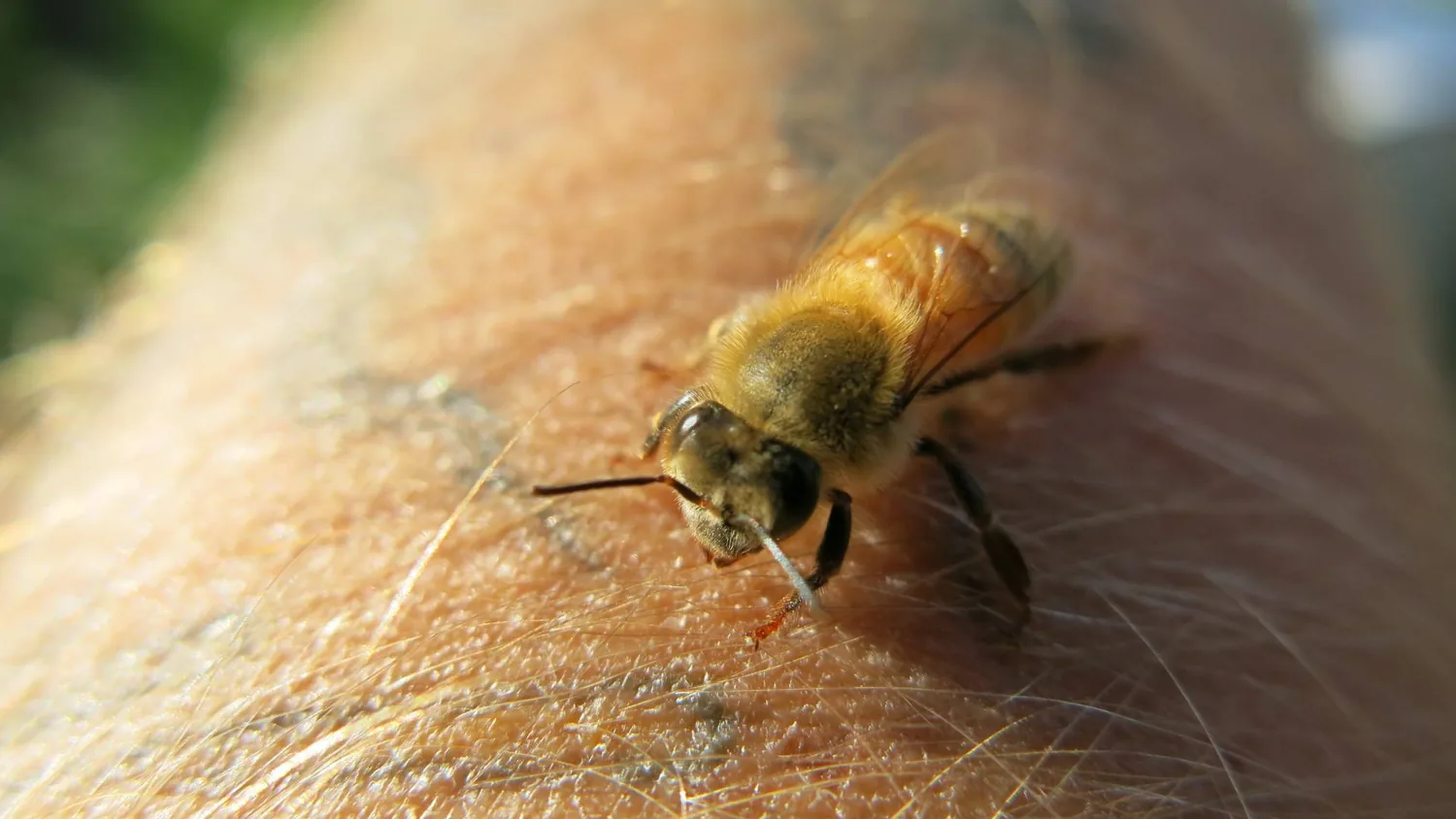
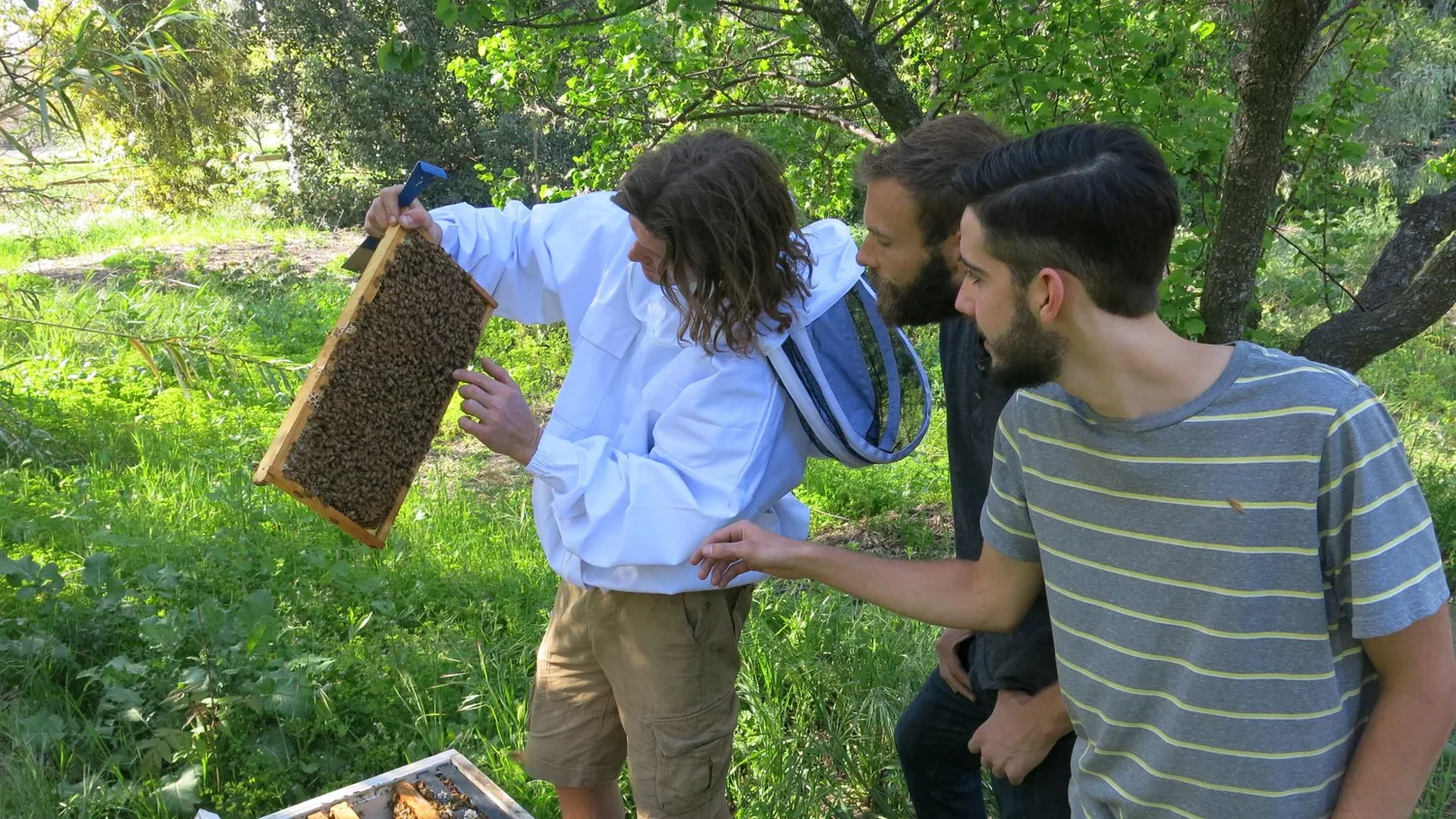
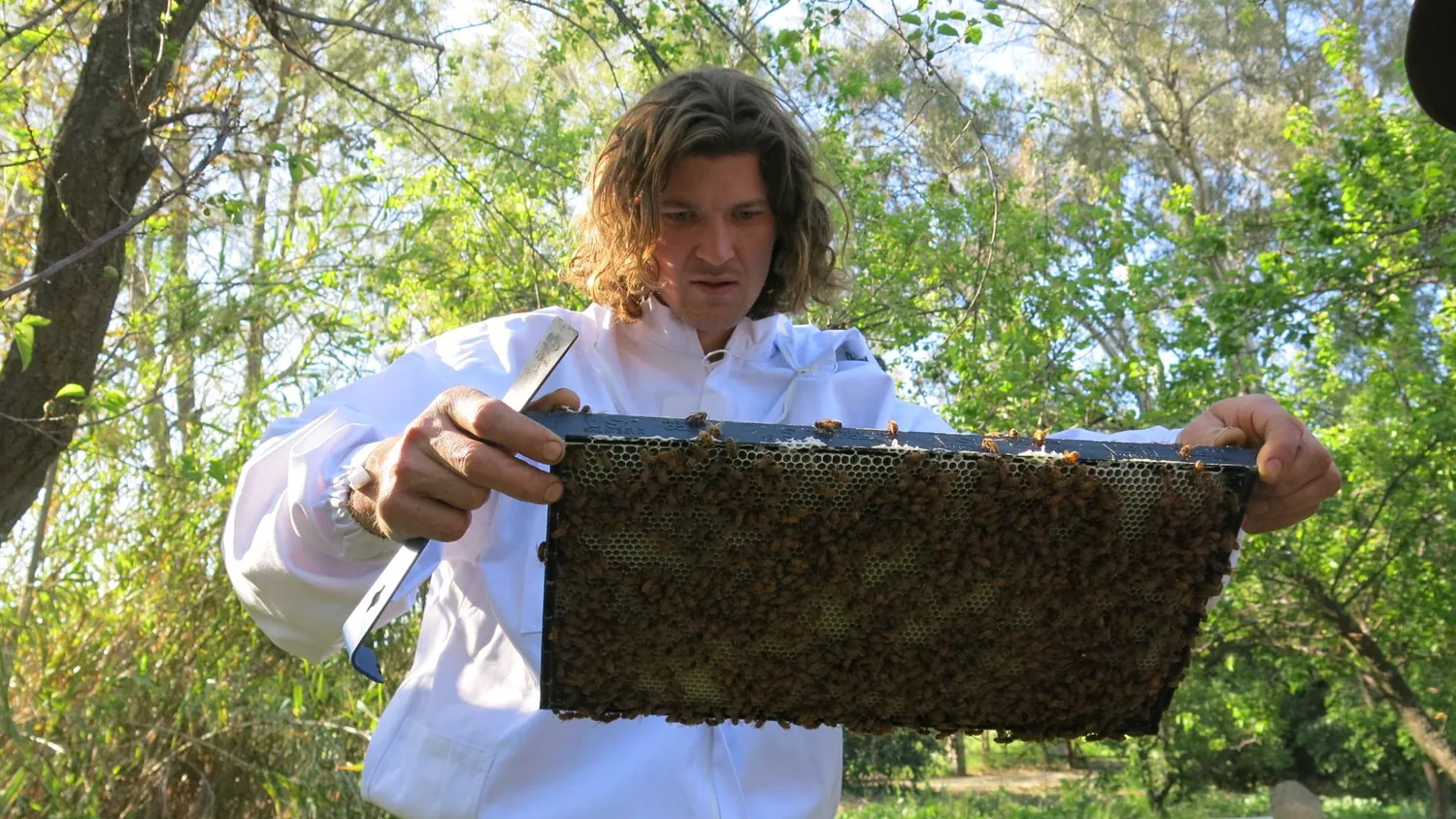
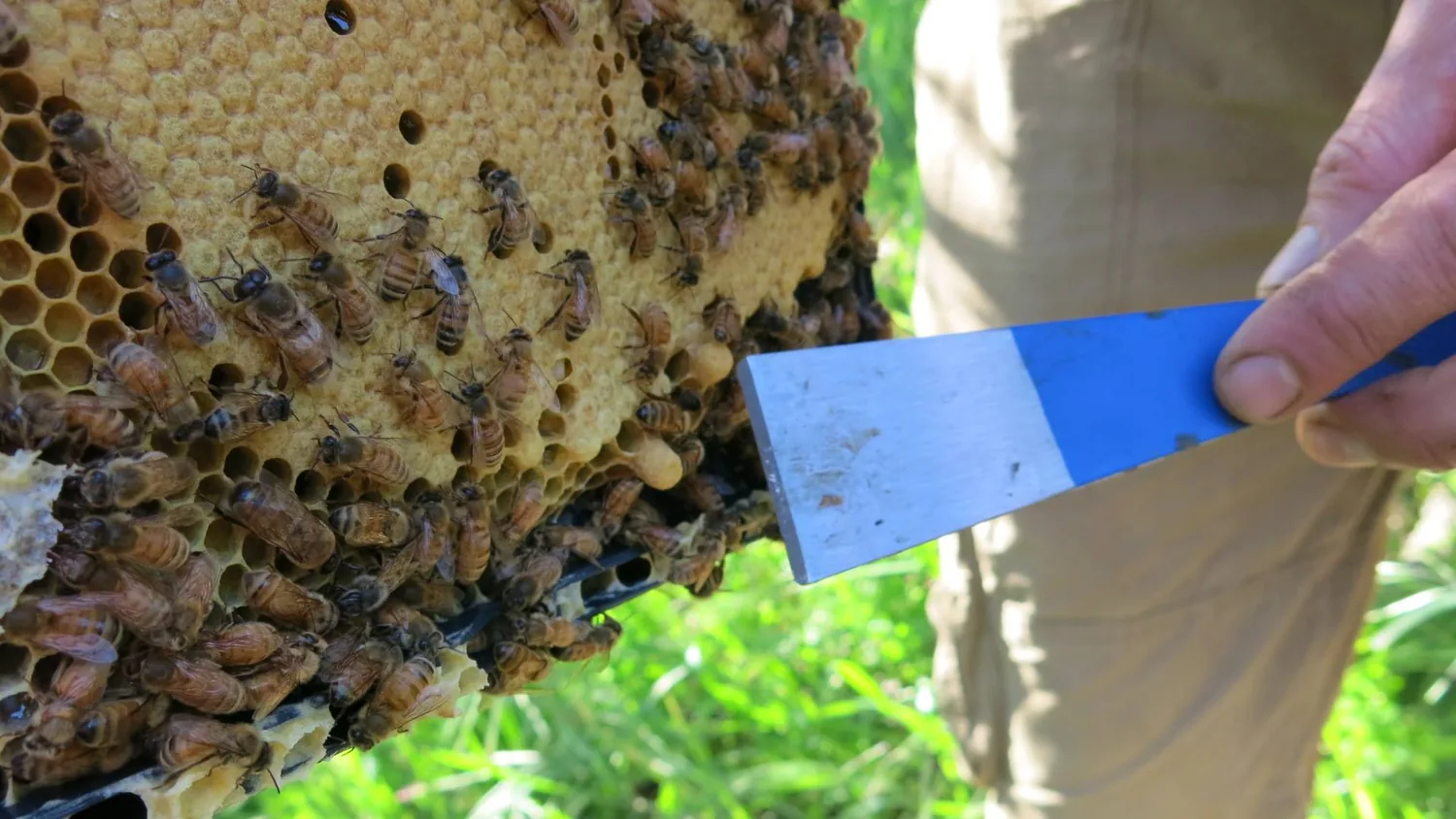
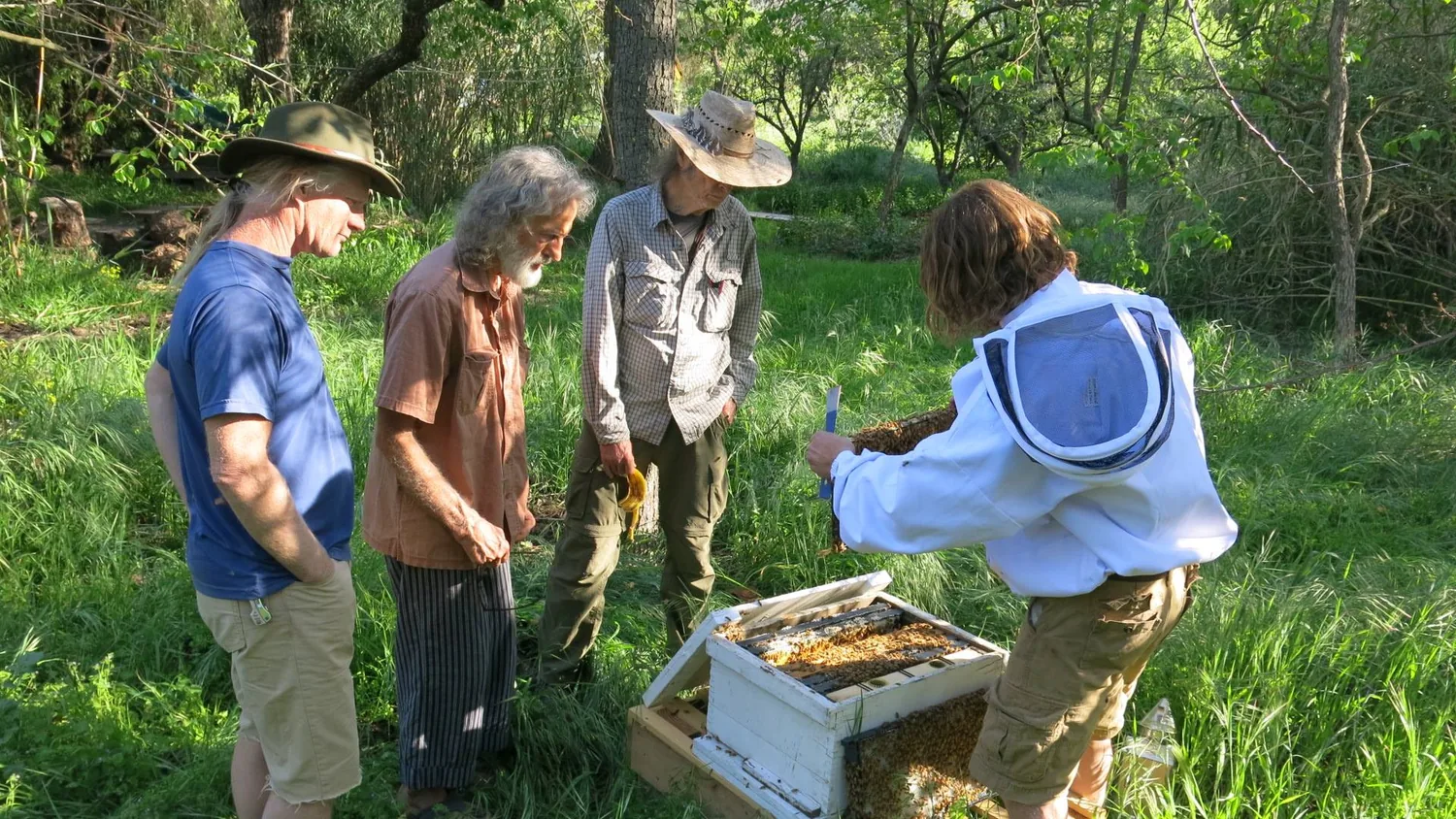
Beekeeping brought observation, patience and collective learning into one small place. A hive inspection became both ecological work and an outdoor classroom.
A close encounter with a pollinatorReading the hive togetherLooking carefully at the combThe living architecture of the colonyThe hive as a shared lesson
07 · Ethics made visible
Earth Care, People Care, Fair Share
The workbook’s final narrative explains the three permaculture ethics through ordinary systems already operating on the farm.
Earth Care
Water-conscious land stewardship
Greywater, rainwater harvesting, perennial planting, swales and climate-appropriate design were intended to keep water in living soil and reduce pressure on the well.
People Care
Care beyond formal meetings
The community looked after people when they were sick, helped one another find work and treated mutual aid as part of shared life.
Fair Share
Tools, vehicles, work and food
Residents shared workshop tools, garden tools, occasional vehicles, cooking and harvests. Surplus food was directed toward local shelters or food banks.
No single person explains Full Circle. Its history belongs to founders, elders, residents, children, visitors and friends whose lives intersected with the land.
Founder
Bob Goddard
Bob founded Full Circle and invited people to help rebuild the original house. The workbook remembers him as fair and accommodating even when he retained final authority.
Matriarch & organizer
Jaya
Jaya ran the shared food program, coordinated bulk provisioning and Sunday produce runs, and held the biweekly meeting rhythm that helped the community function across decades.
The larger community
Many hands, many eras
Residents and guests planted gardens, raised children, cooked meals, repaired buildings, hosted meetings and kept the place alive through constant transition.
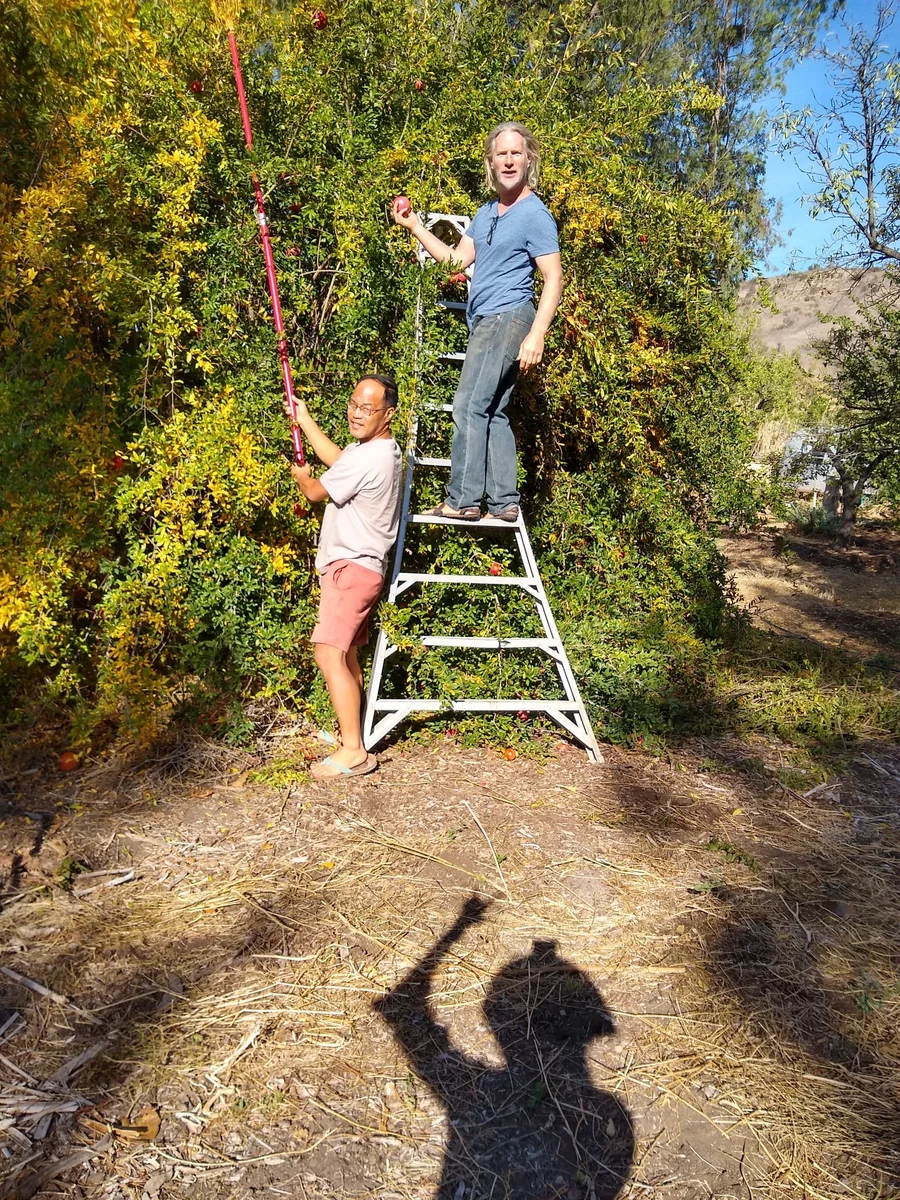
Robert and Alpha harvesting pomegranates Full Circle Paradise, October 2021.
A friendship that continued
Alpha
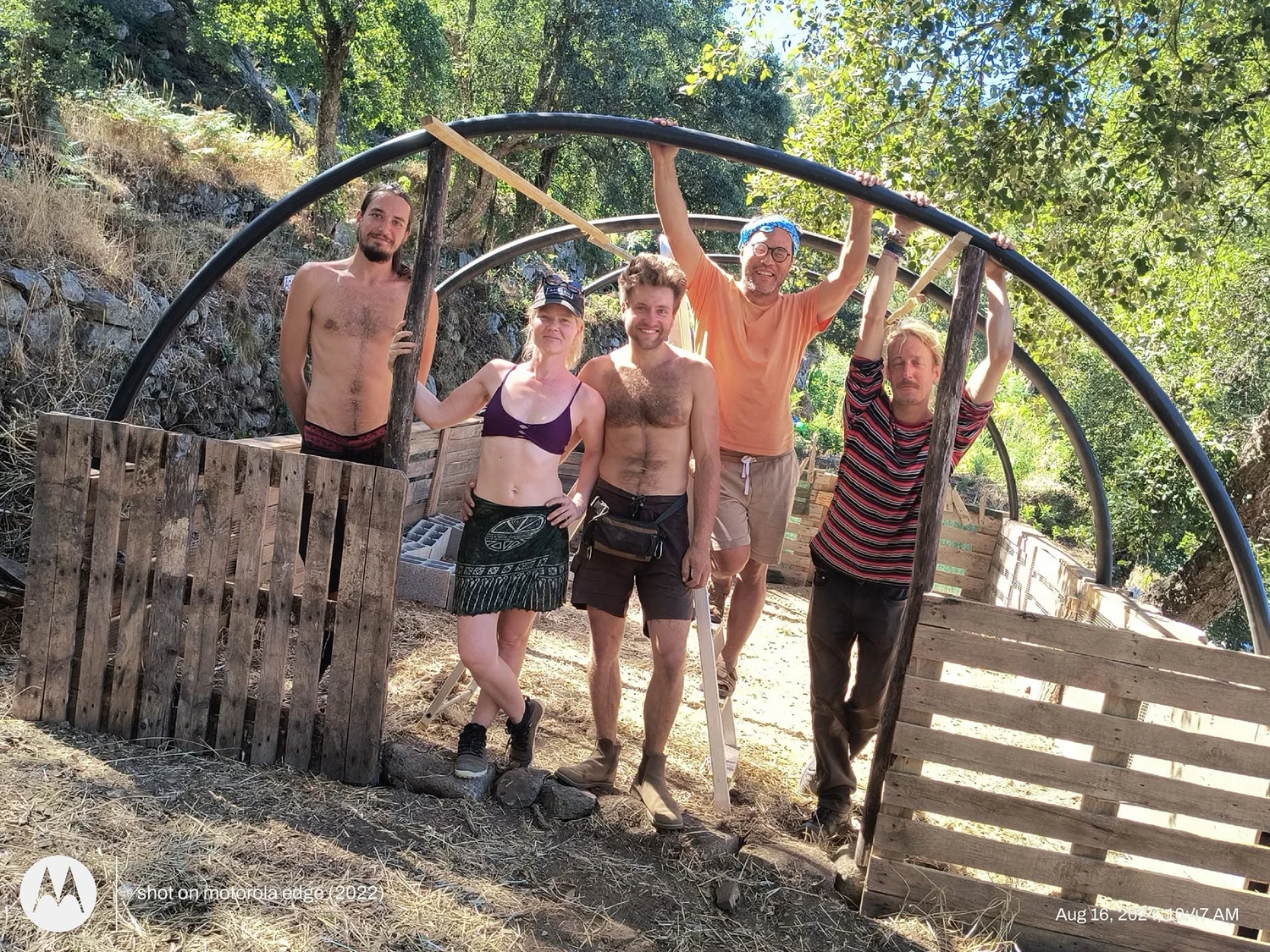
Alpha lived at Full Circle Paradise and became one of my close friends. Our friendship continued beyond the farm: I later visited him at Lost Valley Community in Oregon, we traveled together through Mexico and Guatemala, and he visited me in Portugal in 2024.
That continuing relationship belongs to the social history of Full Circle. Communities are not only places where people live together; they are places where relationships begin and then travel outward.
Friendship beyond the farm Building together in Portugal, 2024.
09 · Governance as an evolving practice
No final form
Full Circle Farm began with a largely patriarchal structure. Bob Goddard, the farm’s owner, held final veto power, although the community still felt democratic and he was remembered as fair and accommodating toward people’s needs.
The community later moved toward sociocracy. By the time I joined, it was changing toward holacracy: a decentralized model in which people lead their own domains and carry responsibility for them.
I appreciated that decentralization. Others found the model confusing or difficult to apply fully, and there was a recurring pull back toward a more familiar central authority.
By 2022, Bob had retired from running the community and Jaya had also offered to step back from its most demanding responsibilities. Full Circle was again in transition, still searching for a durable form of self-governance.
The uncertainty was part of the design story. Social systems, like gardens, are never finished. They require observation, feedback, pruning, patience and the willingness to begin again.
These outside references help explain the governance ideas named in my 2022 reflections. They are not evidence that Full Circle formally adopted either system in full.
Consent & feedback
Sociocracy
Sociocracy organizes work through small circles with defined aims and domains. Policy decisions are made by consent, meeting rounds help every voice enter the conversation, and review dates keep agreements open to feedback and improvement.
Holacracy replaces a fixed hierarchy of job titles with explicit, evolving roles. It combines clear responsibilities, distributed authority, structured operational meetings and a governance process through which people can propose changes to the organization itself.
What appealed to me was the possibility that leadership could be real without being concentrated: people could hold authority inside clearly defined domains and change those roles as the living system changed.
The five-year implementation plan imagined social systems as deliberately as water, gardens and buildings. The ideas below are presented as 2022 proposals, not as verified completed projects. Contemporary organizations are included as outside references that help explain what those proposals could have meant in practice.
A shared project can be a workshop, a classroom and a celebration at the same time
A workshop as a commons
From “worker space” to makerspace
The workbook proposed a shared worker space. The makerspace movement offers a fuller model: a collaborative workshop where tools, equipment, knowledge and experimentation are held in common. Such a place could support repairs, natural-building prototypes, art, electronics, farm maintenance and small livelihoods without requiring every resident to own every tool.
TimeBanking turns acts of help into reciprocal exchange: one hour given earns one hour that can later be received. Because every hour is counted equally, cooking, transportation, repairs, companionship, teaching and garden work can all become visible contributions to community life.
A Repair Café is a free gathering place where people bring broken household objects and repair them alongside skilled volunteers. The social value is as important as the repair itself: practical knowledge is passed on, useful things remain in circulation and neighbors learn from one another.
A shared workshop can bring together people from different backgrounds around making, tinkering, creativity and learning. At Full Circle, that could connect existing building knowledge with shared tools, repair events and practical education.
A garden designed to invite neighbors and visitors into hands-on permaculture education: propagation, soil care, water conservation, pollinators and perennial food systems learned by doing.
Gathering
Permaculture events
Workshops, harvest days, repair gatherings and seasonal celebrations could connect the farm with the wider Ojai community while allowing residents to teach what they knew.
Replication
Sister farms
The ambitious idea of creating other Full Circle communities based not on copying a fixed blueprint, but on carrying shared ethics into different landscapes and social conditions.